• About Alachua County Today
  • Advertise
  • News
  • Community Calendar
  • Public Notices
Alachua County Today Alachua County Today

Boukari Law, P.A.

 PLACE YOUR LEGAL NOTICES HERE

17
Wed, Dec
627 New Articles
  • Home
  • Advertise-Subscribe-About Us
    • About ACT News
    • Advertise
    • Subscribe
  • Calendar
    • Calendar
    • Gov't Meetings
  • News
    • Local
    • Obits
    • Sports
  • Public Notices

A Helping Hand, Fighting Hunger at Home

Details
RAY CARSON
Local
28 May 2020
  •  Print 
  • Email

HIGH SPRINGS – With 36.5 million Americans suddenly unemployed due to the COVID-19 pandemic, many families have seen both their income and savings disappear. It becomes a challenge to decide what bills or necessities can be done without. Mortgage or rent, utilities, food or medical all are important, but food is essential.

Many individuals and organizations have stepped in to donate or volunteer for food giveaways and deliveries. The Alachua County school system has provided over a million meals to school kids during the pandemic. Farm Share and other charity food distribution organizations travel the state bringing semi-trucks of food to communities.

Locally, many churches or community organizations have donated food or money, distributing the food to people in cars lined up in parking lots, masked and never coming in direct contact with the drivers. Most of these organizations hold these drives weekly or bi-weekly, but one small ministry in High Springs is making an effort daily to provide for those in need.

Every day, Pastor Sammy Nelson has overseen the distribution of donated food to families in need with children. He usually ran the distribution in his small downtown ministry, Witness of Christ (WOC), on Main Street in High Springs. But the Covid-19 has brought a bigger challenge. “I have seen a huge rise in families in need. People coming to the food distribution has increased 100 percent or more, but you have to meet the challenge to help them,” Nelson said.

The pastor is a big man with a powerful build but a soft, calm voice. He was born in Archer and spent 23 years in the Army as a Military Policeman. During his service he participated in Desert Storm and retired as a First Sergeant.

During his time in the Army he also had other duties as a father and a pastor. He and his wife of 35 years raised 10 children and have seven grandchildren. They share both a strong religious belief and a love for children as well. While raising 10 of their own, they also founded a ministry for children. Nelson made use of the Army's education benefits and received a degree in law enforcement and a Bachelor’s Degree in sociology. Once he retired, he became a full-time student and received a Master’s in Divinity and a Doctorate in Ministry.

Ten years ago, Nelson and his wife opened a storefront where they could offer after-school services to struggling parents. The ministry also collects food for the children and struggling families. Most of it comes from donations by individuals, farms and food stores such as Hitchcock’s and Publix. The biggest provider is Bread of the Mighty Food Bank in Gainesville. Three days a week, Nelson would go to each location, as well as some farms, to gather the food donations.

With the increasing need caused by the pandemic, Nelson searched for more sources and sponsors to meet the skyrocketing demand. He also needed a bigger place to distribute and worked with the City of High Springs to distribute from a parking lot behind Main Street with police to direct the traffic.

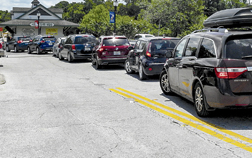
The ministry still does smaller distributions from the building three times a week, but the other is a bigger operation with trailers full of food pallets. On May 16 the WOC held its largest distribution with 14 pallets supplying multiple boxes of food to the long line of cars winding through the parking lot. Nelson, along with volunteers from his ministry, all wearing masks and gloves, loaded each car's trunk with boxes holding a variety of food including fresh vegetables, cheese, milk, snacks and chips. “We will be here and providing for those who go hungry as long as the need exists,” Nelson said as he loaded another box in a car.

#     #     #

Email rcarson@

alachuatoday.com

Add a comment

Food 4 Kids Program Adapts: Volunteers Keep Local Program Running

Details
RAY CARSON
Local
21 May 2020
  •  Print 
  • Email

ALACHUA – A local program that provides food to families hit a glitch when COVID-19 distancing requirements and shutdowns occurred. But Alachua resident and volunteer Ted Wilson wasn’t about to let the vital program flounder when so many children and families depended on it.

Food4Kids Backpack Program of North Florida was founded by Jennifer Moore who took pizza, juice and cupcakes to Gainesville’s Terwilliger Elementary School to celebrate her daughter’s birthday with her third-grade class on a Monday morning in 2010. She noticed that as most kids were still finishing their first slices of pizza, a few were already asking for seconds and thirds.

When she asked the teacher about these children, she learned that the reason they were so hungry was because it was a Monday, and there was a good chance that the last full meal they had eaten had been at lunch on Friday.

After looking into the matter further, she learned that one out of four children in North Florida live in food-unstable homes. That often means they don’t have reliable access to food, especially on the weekends.

Seeking to ensure these children didn’t go without food, Food4Kids Backpack Program of North Florida was founded to create a network of locations that would help sponsor, fund or donate and distribute food every Friday to school children in need.

The Backpack Program volunteers fill backpacks with nonperishable food and distribute them to students in need, from kindergarten through high school. The kids bring these backpacks home on Friday and return them on Monday so they can be refilled for the following weekend. They also receive larger boxes of food for extended holidays and summer breaks. The organization partners with food banks, faith networks and local businesses to create a sustainable support network that gathers monetary or food donations and delivers them to the schools and volunteer locations to distribute to in-need students.

There are over 29 volunteer groups and charities involved in the program that distribute to two to three schools each. For the past 12 years, Wilson has been doing the backpack program for Alachua Elementary and Santa Fe High School. Working with other volunteers they distribute between 25,000-30,000 meals a year.

But like everything else, the COVID-19 virus has affected this program as well. Schools are no longer open and other distribution points have been affected by the need for social distancing and safe handling of food to avoid spreading the virus.

Just before the state lockdown, Wilson had purchased a large amount of food but suddenly had no way to distribute it without exposing volunteers to possible infection. Wilson got in touch with Alachua Mayor Gib Coerper to see if the City of Alachua could help with getting the food distributed while it was still fresh. The mayor was able to set up a distribution point at Alachua’s Legacy Park through the city’s Recreation and Culture department that got food to the families that needed it.

However, the Food4Kids Backpack program still had an issue for the future. The schools were still going to be closed for the year. Social distancing requirements also made it difficult to organize volunteers for a distribution event. After rethinking how it could be done with the least amount of contact, they switched to grocery store gift cards that offered the opportunity for families to still get food and also be able to choose what foods were best for the family.

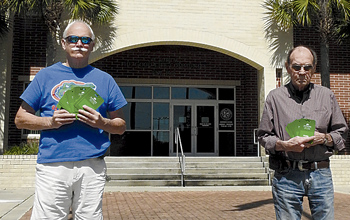
Coerper contacted a friend at Duke Energy to see if they would be willing to sponsor funding for gift cards. The company donated $500 toward gift cards, which Wilson bought as individual $25 cards.

While this was a single donation, many individuals and businesses have helped as well. Wilson said he is always amazed by the generosity of the community and local businesses that contribute to the program. “We never lack money to keep the program going or volunteers to lend their time,” said Wilson. “This community believes in helping others in times of need.”

#     #     #

Email rcarson@

alachuatoday.com

Add a comment

Farm Share Closing Food Gap

Details
RAY CARSON
Local
21 May 2020
  •  Print 
  • Email

ALACHUA COUNTY – Local communities are feeling the impacts of COVID-19 in a number of ways beyond health and safety aspects. Due to social distancing, loss of jobs, less commerce and transportation, economies locally and throughout the world are facing a serious downfall.

This means that governments have had to spend much of their resources to help support both individual and businesses, which have been affected by various measures mandated by federal, state, and local authorities. One of the side effects of weakened economies, less commerce and inability to transport or import, is its effect on the supply chain, especially food.

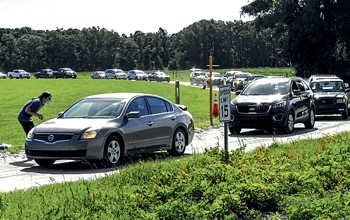
Food organizations such as Feeding America, Bread For the World and Farm Share are working to distribute as much as they can by partnering with local community volunteers and churches. On April 29 at the Easton Sports Complex in Newberry, a long line of cars slowly wound its way past a series of tables and pallets containing bags of food. Each table had been set up with different food products at each station. As the cars slowly moved down the line, volunteers would load the open trunks with bags of food. Respecting the rules on social distancing and health cautions, each volunteer wore a mask and gloves, putting the food bags in the trunks so there was no physical interaction. Between 9 a.m. and noon, over 500 cars went through the line.

While the U.S. is the wealthiest country in the world with over $105,990 billion in wealth, there is a shockingly high number of citizens that have trouble getting enough food. In 2017, 40 million people struggled with hunger in the United States and today 45 million Americans rely on stipends from the Supplemental Nutrition Assistance Program (SNAP) to buy food each month, according to the USDA. Two-thirds of these benefits go to households with children.

When schools closed due to COVID-19, it temporarily cut off the meals, but educators nationwide and the Federal government have organized programs to continue the meals.

The majority of the people on food assistance programs have jobs, but many are in low income and service industries where a single paycheck makes a difference in covering the bills and food. Now, many of these jobs are gone and the families are left with no income.

Farm Share was established in 1991 by Patricia Robbins, owner of a commercial seafood company. When she retired in 1991, she founded the Farm Share program with the goal of recovering wasted produce and supplying it to various organizations and directly to the public to help alleviate hunger caused by poverty for lower income families and the elderly.

The concept was based on the fact that up to 50 percent of the produce raised on farms is thrown away. Typically stores want to provide the best product to their customers and accept only produce that is cosmetically perfect. Misshapen or blemished produce is rejected, leaving the farmer little choice but to dispose of it or use it as fertilizer for their fields.

Robbins found a unique solution by working directly with the farmers to get this wasted food to people in need. This simple but innovative idea has now grown into an organization that feeds millions of people and distributes more than 88 million pounds of healthy and nutritious food annually. Farm Share also works with the federal government to distribute packaged goods and gets donations and funds from the general public

COVID-19 has had a huge impact on Farm Share's distribution. Most of the food distribution events have doubled in people needing assistance. Farm Share has four distribution warehouses in Florida. The Jacksonville center covers much of North Florida and is doing about eight events a week in addition to doing 1,800 drop-offs to senior living facilities.

This Saturday, May 9, they will hold two distribution events in Northeast Florida for people in need. Farm Share will be at the High Springs Civic Center from 9 a.m. -11 a.m. and at the Lake Butler Community Center from 9 a.m. -11 a.m.

For other dates and locations of events or to contact the organization to volunteer time or donate funds, go to www.farmshare.org.

#     #     #

Email rcarson@

alachuatoday.com

Add a comment

Back to Work

Details
RAY CARSON
Local
21 May 2020
  •  Print 
  • Email

ALACHUA – In the last two weeks, Florida Governor DeSantis has relaxed stay-at-home and business restrictions in an effort to get the state economy back on track and put people back to work. Under recommendations form the CDC, the reopening is on a three-phase schedule, a framework which outline goals of each phase before moving on to the next.

The first phase allows retail outlets and restaurants to operate with indoor capacity at 25 percent. The first phase also lets medical facilities begin providing elective surgeries. Sporting events can resume without spectators. All of the openings are based on people observing social-distancing recommendations and use of face masks. DeSantis stated that face masks should be standard, but people who don’t wear them won’t be fined. As previously announced, schools will remain out of session, with online “distance learning” in place, and visits to nursing homes still will be prohibited.

Over 30 states are beginning to reopen, yet none have met the goal of 14 days of declining cases that was supposed to be the benchmark to start Phase 1. The COVID-19 pandemic is still growing, and opening up businesses and removing social distancing could cause a resurgence in the infection rate. At the same time, many people have been out of work for over a month and what savings they had are running out. Especially for local, small retail, restaurants and bars, the ability to last until they can reopen is critical. Much of whether the reopening will succeed without will depend heavily on people following the guidelines.

For store owners, following guidelines is a matter of good business practices. Many businesses have signs stating that masks are mandatory to enter. “The business owners get it,” said Kelly Harris, owner of Kelly’s Kreations in Alachua, a shop that is an eclectic mix of gift items and a floral shop.

“This virus is a serious health problem and we want our customers to feel safe to visit and protect ourselves as well,” said Harris. “I have hand sanitizer at the door, require a face mask to enter and maintain a six-foot distance. This a small effort to keep our customer safe.”

Like many other small business owners, Harris had to retool her business model to meet the crisis. “I decided to do daily Facebook posts with lessons or funny material for people to view. It also served to keep attention on my business and help promote other Main Street businesses and restaurants. I called it ‘Making Lemonade’ because when life hands you lemons like the current crisis, you find the positive way to deal with it,” said Harris.

Harris says that the podcast took off and has viewers from throughout the U.S. and Canada. It became a game and people contributed to it and sent her gifts with lemons, including a mask, tea, and cookies as well as other things. The podcast has helped keep people aware of her business.

“I was really glad they allowed us to open just before Mother’s Day,” said Harris. “I had just about depleted my emergency funds, and luckily, I had a huge response to Mother’s Day for flowers. It's great to be in business again.” She now plans to have a larger online presence and hopes to continue the ‘Making Lemonade’ podcast.

For some, the situation was even more dire the longer the shutdown continued. Stephanie Fletcher and her mom had opened The Happy Place, an ice cream/coffee parlor and gift shop two weeks before the shutdown occurred. They had invested a lot to get the shop decorated and functional, but had no opportunity to make it back. Now they are reopened and hoping to get business. Several of the store owners along Alachua’s Main Street said that people were still cautious about the conditions, and there are fewer visitors so far.

Business owners in High Springs were also finding inventive ways to survive when the stores were closed. Tina Lanza of Lanza Gallery and Art Supplies was also closed for six weeks as a non-essential business. For Lanza, the internet was also her business lifeline and effective marketing tool. “I really pumped it out in online marketing. Offering curbside pickup or delivery, people could order online and receive advice for their art needs,” Lanza said. “I also made daily use of my Facebook page to keep people aware of the business.”

Lanza is currently creating an online store that people can order from as it’s convenient for customers and Lanza believes it is a preparation for any future resurgence. “I also started selling handmade cloth masks and offered free paper masks with a $25 purchase,” she said. Like the others, Lanza is strict on safety measure for the store. At the front door sits a table with hand sanitizer to use before entering and a sign requiring masks. “We have to just do what we have to do in these times. Safety matters,” Lanza said.

One unexpected oddity is the pawn shop business. It would be expected that with so many people out of a job that people would be pawning items for cash. But according to several local pawn shops, it is the opposite. People paid off their items in pawn and took them back. They also purchased other items. In Santa Fe Pawn in High Springs they were having trouble getting enough items in their inventory for display.

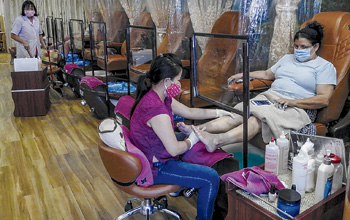
On Monday, barber shops and beauty salons were allowed to open. At Lovely Nails on Main Street in High Springs they also wear gloves and have splash shields between the manicurist and customer. Down the street, Decades on Main was opening for the first day since being forced to close over a month ago. Barbara Devino was helping a customer pick out some items, with both of them wearing masks. At the counter a small table separated the customer and Devino. On the table was the eve-present hand sanitizer and a credit card machine, which was the only payment method to maintain distance. After a customer used the machine it was wiped down before the next person. “We do what we have to, to maintain safety for everyone. It’s minor and a small step to be back to working,” Devino said. “It feels great to be able to work again.”

#     #     #

Email rcarson@

alachuatoday.com

Add a comment

Will Reopening Work?

Details
RAY CARSON
Local
21 May 2020
  •  Print 
  • Email

ALACHUA COUNTY – On March 16, 2020, President Donald Trump recognized the growing threat of the Corona virus that had grown from a single case on Jan. 20 to more than 4,500 cases and at least 88 dead in less than five weeks. Many of the countries that were already battling the pandemic had found that social distancing and limiting events with crowds had proven an effective way to slow the rapid spread of the disease.

The president acknowledged that the Center for Disease Control and members of the others health organizations were warning of the continued spread and the need to slow its pace. They recommended closing non-essential businesses, limiting events initially to 50 and eventually to10 people and staying in home isolation except for essential trips.

At that time, Trump said that Americans could be hunkered down and practicing social distancing at least until July or August. He added that the country "may be" headed into recession as businesses are forced to lay off millions of workers, and the outbreak could last into the summer, perhaps as long as August. But both the seriousness of the pandemic and the effect on the economy were underestimated.

It was a necessary step for the government to take but would have big consequences both economically and politically. Exactly one month later on April 16, Trump announced he thought it was time to reopen the country, despite cautions from medical experts, and announced a set of guidelines. The 18 page “Opening Up America Again” identified the circumstances that states should achieve before beginning the three-stage reopening process. The president also suggested a date for opening in 14 days, on May 1-4.

“We must have a working economy. And we want to get it back. Very, very quickly. And that’s what’s going to happen,” Trump said at a White House press briefing after announcing the new guidance. As many as 29 states “will be able to open relatively soon,” Trump said later in the briefing. “We have a lot of states that, through location, through luck and also through a lot of talent ... are in a very good position.”

Federal Reopening Guidelines

The guidelines state that states could consider a three-stage reopening after they “had 14 days of a downward trajectory of cases,” but left it open that they could consider all influenza-like symptoms instead of just COVID-19 cases. It also required a “downward trajectory of positive tests as a percent of total tests within a 14-day period (flat or increasing volume of tests) and a robust testing program in place for at-risk healthcare workers, including emerging antibody testing.”

Testing requirements did not include increased general public testing, which, according to medical experts, needs to be much broader than is currently available.

Hospitals also have complained that they have not received enough tests. Currently, testing is limited to people showing symptoms. There are individuals who are asymptomatic without symptoms who can carry and spread the virus, so this type of testing does not identify everyone who is infected and can spread it. It also limits the numbers of population tested, thereby decreasing the figures on actual infections.

The White house also made these guidelines not mandatory and left it up to state governors to decide when their state met the criteria to start Phase 1. So far, no state has met the 14-day downward trajectory in cases, but 29 states are opening to varied degrees. Part of the rush is due to trying to restart the economy, both nationally and locally, and get people back to work. Another aspect is political. For many governors, some citizens are tired of restrictions and want out. There have been protests in several states and some elected officials are worried it could affect the upcoming elections.

State Actions

Some states like Georgia are going full out, opening a variety of close contact businesses such as hair salons and bowling alleys and allowing group activities that were not recommended until Phase 2. Others are more cautious and extending their “stay at home” orders for another two weeks.

In Florida, Governor Ron DeSantis is supporting the reopening timeline while also trying to create a measured approach to reopening. He is trying to create a statewide policy but is determining openings based on local conditions and allowing county governments to determine when conditions are right. While this has created some confusion on what rules apply and who is in charge, it also allows more flexibility and perhaps less culpability to the state government.

Currently, the governor has approved retail businesses and restaurant to reopen as long as they use either outside facilities or only allow 25-percent capacity in interior settings. All citizens are required to wear face masks in situations where they will interact in indoor environments, but can remove masks in restaurants to eat. State and county parks are open, but social distance requirements of six feet still apply. Elective surgeries can resume. Bars and nightclubs are still closed and events over 10 people are still limited, although DeSantis made an exception for religious services. He has also reopened all beaches and hotels. Some counties with high levels of COVID-19 were not included in the governor’s reopening.

The “Stay at Home” order Governor DeSantis issued has been in effect for less than a month and was created after several counties, including Alachua County, initiated their own and maintained lower infection rates. While DeSantis has claimed, somewhat correctly, that Florida's numbers have been lower than expected due to the state's county by county approach, only two-percent of the population has been tested and there have been questions over how the data is recorded. State records initially did not include anyone who was not an official state resident, which discounted any seasonal residents. Last week, the Florida Department of Health asked the Florida Medical Examiners Commission, which sets minimum and uniform standards for statewide medical examiner services, to stop releasing its own comprehensive list of COVID-19 deaths. The medical examiners' death tally was 10 percent higher than that of the Florida Health Department,

Public Cooperation is Vital

Regardless of requirements mandated nationally, statewide, or locally, the effect of these measures is reduced or rendered useless dependent on whether the public follows them. Partial populations following guidelines is ineffective if others do not.

Some individuals believe they are immune or protected, that restrictions are an attack on their personal liberties, and are pushing to have all restrictions lifted regardless of scientific information available. Numerous conspiracy theories have surfaced and have influenced opinions without consideration of facts. An important consideration with spreading COVID-19 is not simply whether a person will get seriously ill, but the possibility of others being affected because of people disregarding mandated and recommended measures. If people cooperate and work together for the safety of all, the reopening can work. But if it is dismissed by some or rushed too early, it can cause a stronger outbreak and undo the progress already made.

This past weekend, two days before the new rules went into effect, the boat launch on US 27 on the Santa Fe River was so crowded that cars were parked in the woods and on the shoulder of the road, with the vehicles packed together. While some people seemed to maintain the distance rule, others gathered in larger groups and no one was wearing masks. It appeared that no one cared.

The COVID-19 pandemic is a situation that has not been faced in over six generations. Whether the time to reopen is premature or accurate will be determined in the next few weeks. The chance of success will be based on the decisions of leaders and on the willingness of citizens to cooperate.

#     #     #

Email rcarson@

alachuatoday.com

Add a comment

More Articles ...

  1. Women Entrepreneurs Thank Front-Line Workers
  2. Local Businesses Reeling from Shutdown
  3. Educating Minds, Nourishing Bodies Amid COVID-19
  4. Religion Finds Solutions Amid COVID-19 Restrictions
Page 116 of 303
  • Start
  • Prev
  • 111
  • 112
  • 113
  • 114
  • 115
  • 116
  • 117
  • 118
  • 119
  • 120
  • Next
  • End
Alachua County Today Alachua County Today

Explore

  • About Alachua County Today
  • Advertise
  • News
  • Community Calendar
  • Public Notices