





Top Stories

Grid List

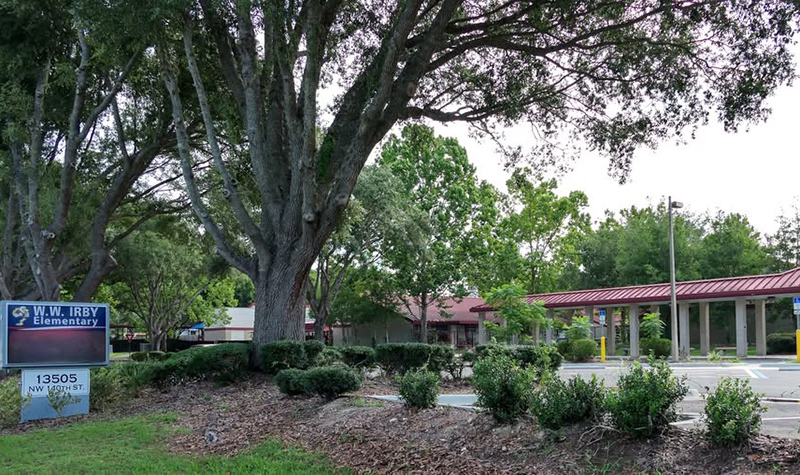
ALACHUAA group of teachers, parents and community members in Alachua are pushing back against a proposal that could close Irby Elementary School, and they want the school board to hear them before it’s too late.

The Alachua County School Board is expected to vote on the school’s future at its May 5 meeting. The board will also hold a workshop April 29 to discuss the options ahead of that vote. For many in the Alachua community, those two dates feel like a closing window.

Irby Elementary, which currently serves pre-K through second grade students, was added to the district’s list of potential closures in February, just 10 days before the board held its initial vote on school consolidations across the county. Most other school closures being considered by the district had been announced months earlier, in November 2025.

For Lisi Osborne, who has taught at Irby since 2004, the timing felt rushed and the process has felt one-sided ever since.

“Irby faculty and staff heard about it on the news,” Osborne said. “This isn’t just a job. This isn’t just a place we come to every day to work. This is our home and this is our family.”

A hidden gem, advocates say

Osborne describes Irby as a school that is easy to overlook from the outside but hard to forget once you’ve walked its halls. Colorful sensory paths cover the floors. Murals line the walls throughout campus. The facilities, she said, are well-maintained and designed specifically with young children in mind.

“Irby Elementary is a hidden gem in the community of Alachua,” Osborne said. “It always has been. It is one of a kind.”

The school’s supporters have spent weeks building a case for keeping it open. Faculty and families have sent more than 200 emails to the school board. They have shared Google Maps comparisons of Irby’s campus alongside schools in Gainesville with the same floor plan that currently house pre-K through fifth grade students. They have submitted proposed classroom layouts to board member Dr. Sarah Rockwell showing how third and fourth grade could be added to the Irby campus without major new construction.

Their central argument: closing Irby isn’t necessary. The building can handle more students, and the community needs it.

The entire board has been invited to tour the campus and see it for themselves. So far, Rockwell is the only member who has accepted, spending several hours in Irby’s media center listening to staff concerns and reviewing the case for keeping the school open. Osborne said board members Janine Plavec and Dr. Leanetta McNeely have also been receptive and supportive throughout the process.

The district’s options

The district is weighing four options for Irby’s future. Three would allow the school to remain open, expanding from its current pre-K through second grade configuration to serve pre-K through fifth grade. The differences between those three options largely come down to how attendance zones would be drawn, specifically, how students on either side of U.S. Highway 441 would be divided between Irby and a newly renovated Mebane K-8 School.

The fourth option would close Irby entirely, consolidating its students into Mebane K-8 School alongside students from Alachua Elementary School, which is also slated to close in 2028.

The district’s push to consolidate schools is driven in part by state legislation passed in 2025 that allows charter schools to move into public school facilities operating below certain enrollment thresholds. Under that law, a district would be required to share its building with a charter school and help fund its operation, with no say in how it is run.

Dividing the community

Even among the options that would keep Irby open, Osborne and other community members have concerns. Several of the rezoning proposals would draw the attendance boundary along U.S. Highway 441, a line she says follows existing economic divisions in the city.

“There is more poverty and government housing on the north side of 441,” Osborne said. “This would divide our community even more.”

Osborne and other Irby advocates have proposed an alternative: keep all pre-K through fourth grade students together at Irby, with fifth graders transitioning to Mebane. That approach, they argue, would preserve the sense of community that has defined the Alachua school system for years while still addressing enrollment imbalances.

Parents have also raised concerns about young children being placed on a middle school campus. Several families have told Osborne they are already exploring private and charter school options if Irby closes.

“I fear that the board’s plan may hurt our already low enrollment even more,” she said.

Fears about what closure would mean

Osborne also questions the financial logic behind closing Irby. Consolidating students at Mebane would require building new facilities on its campus to house elementary students separately from the middle school population, a project the district says it plans to complete by August 2028. That construction cost, she argues, makes little sense when Irby’s building is already designed for and suited to elementary-age children.

“Closing Irby and building a new facility on Mebane’s campus will cost millions and millions of dollars when our district is in major debt already,” she said.

What comes next

The board will hold a workshop on April 29 at 10 a.m. before the final vote on May 5 at its 6 p.m. meeting. Osborne and other Irby supporters plan to be present and vocal at both.

She has taught at Irby for more than two decades. Her own children attended the school. That history, she said, makes it impossible to stay quiet while its future is being decided.

“We are pleading to the board to think about what would best benefit our community, our children and our families,” she said.

#     #     #

email editor@

alachuatoday.com

Add a comment

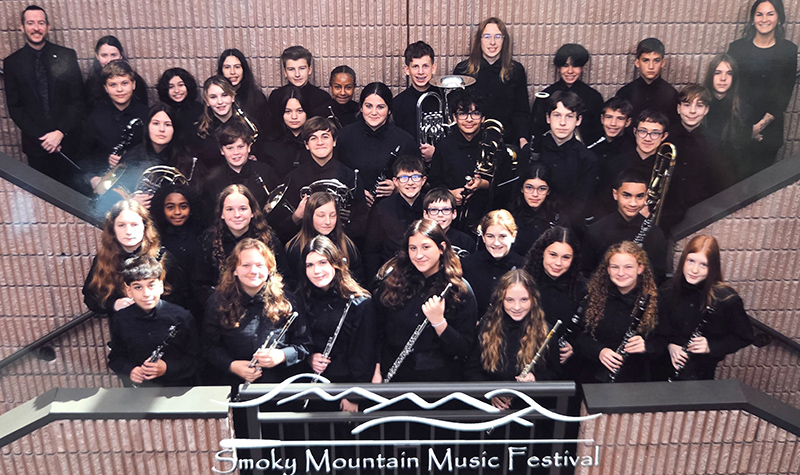
Kanapaha Middle School Ensemble Wins Top Honors/Photo special to Alachua County Today

Local

Gainesville – The Kanapaha Middle School Wind Ensemble’s first performance outside of Florida was an extremely successful one, with the 39 young musicians winning first place for middle school concert bands in the recent Smoky Mountain Music Festival in Gatlinburg, Tennessee.

“The icing on the cake was their 95.67 score out of 100, which was not only first place in their division, but the highest score given to all the groups that performed at the event, including all middle and high school ensembles,” said Michael Loffredo, who directed the ensemble with Summer Atteberry.

The Smoky Mountain Music Festival, established nearly 40 years ago, draws top student ensembles from throughout the U.S. and Canada. The groups are given the opportunity to demonstrate their talents before highly-respected and internationally-recognized judges.

The Kanapaha ensemble performed three pieces at the event, which was the first out-of-state appearance in the history of the school’s band program.

Two members of the ensemble were also singled out for special honors. Flutist MaryAnne Leko and trumpet player Laila McCaslin, both 8th-graders, performed solos at the competition and were recognized for outstanding achievement and performance.

#     #     #

email editor@

alachuatoday.com

Add a comment

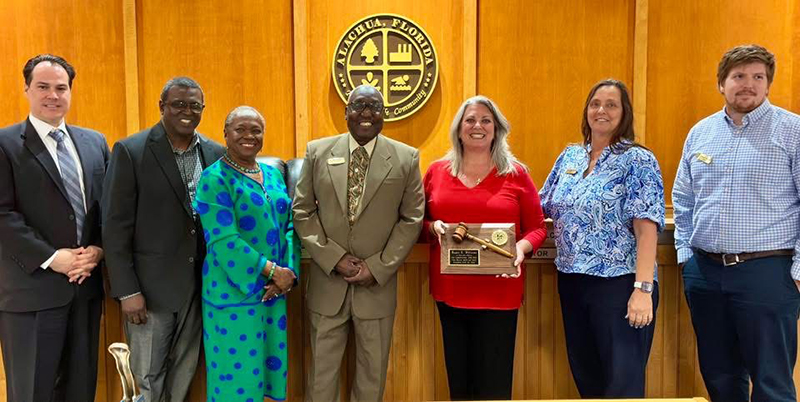
Outgoing Commissioner Dayna Williams, who served as city commissioner from 2018 to 2026 and as vice mayor in 2020 and 2023, was presented with a commemorative gavel plaque on behalf of the city, crediting her dedication and thoughtful decision making during her years guiding the city through important initiatives and challenges./ Photo by KENYATA CURTIS Special to Alachua County Today

Local

ALACHUA – Jackson Youmas was sworn in as Alachua City Commissioner for Seat 3 at Monday's commission meeting, stepping into the role following his victory in the April 14, 2026, city election. The evening also served as a formal farewell to outgoing Commissioner Dayna Williams, who completed her eight years of service, and produced a contested vice-mayor vote that ended with Commissioner Jennifer Ringersen claiming the seat 3-2.

Ringersen wins vice-mayor vote in split decision

Immediately after the swearing in, the commission turned to electing a vice mayor, a required annual action under the city charter following each city election. City Manager Valladares called for nominations.

Commissioner Shirley Green Brown nominated Ringersen, while Youmas nominated Commissioner Jacob Fletcher. With two names on the table, Valladares called a roll-call vote on the Ringersen nomination.

Fletcher voted nay, stating it would be a disservice to vote for Ringersen when he was also nominated. Ringersen voted aye. Youmas voted nay. Mayor Walter Welch voted aye4, and Green-Brown, who had made the nomination, voted aye, delivering Ringersen the vice mayor seat by a 3-2 margin.

Dayna Williams says goodbye

Before the vote on the vice mayor, the commission honored Williams, who served as city commissioner from 2018 to 2026 and as vice mayor in 2020 and 2023. Valladares presented her with a commemorative gavel plaque on behalf of the city, crediting her dedication and thoughtful decision making during her years guiding the city through important initiatives and challenges.

Williams then addressed the chamber in remarks that drew sustained applause.

“Serving the city of Alachua for the past eight years has been one of the greatest honors of my life,” Williams said. “I truly believe that seasons in life have purpose, and I feel at peace knowing that mine has come to a close.”

She made personal remarks to each of her colleagues on the dais. To Youmas, she offered both encouragement and an open door: “I want to thank you for having the guts and bravery to just run for office. That alone takes a big leap of faith. You've got a big job. I know you know that, and I want you to know I will be here if you have any questions.”

She praised Green-Brown as a mentor and maternal figure, called Ringersen a friend and praised her growth as a commissioner, expressed hope for productive differences with Fletcher, and thanked City Manager Valladares, calling him “my rock,” for his guidance over the years. She said she and Welch had learned a lot from each other.

“I was a part of this community before I got elected. I will continue to be a part of this community afterwards,” Williams said, drawing laughter when she quipped near the end of her remarks: “I thought I was going to make it short, but I guess I didn't, and I apologize. But what are you going to do? Fire me?”

Youmas addresses his election, sets tone for service

Near the close of the meeting, during commissioner comments, Youmas spoke at length about why he ran and how he intends to serve.

He thanked supporters and offered what amounted to a statement of purpose, pushing back against media coverage and public speculation about his motivations and the circumstances of his candidacy.

“People never came and asked me,” Youmas said. “I was at CVS, but I met people from this community, all walks of life, from Turkey Creek to Legacy and everywhere else, and they told me their concerns, and it had nothing to do with Commissioner Fletcher or the mayor.”

He confirmed that Fletcher and Mayor Welch had encouraged him to run, but rejected any suggestion of a coordinated back-room arrangement. His wife, Robin Youmas, told the commission during public comment that Fletcher and the mayor had encouraged him because they recognized him as a good man and believed he would be an asset to the community, not because of any hidden agenda.

Youmas, who described himself as a licensed minister, said his decision to run came only after prayer and reflection. “That's how I move. I'm a man of God,” he said. “And I want to thank the community for just believing in me. Every vote we got, we earned it, by meeting people where they were.”

He closed with a call for the commission to move away from division and focus on the work. “All the drama, all the ‘he-said-she-said’, all that kind of stuff has got to stop. It's time for business. It's time to be real and serious about what we do and take care of the people. Let's show it. Let's do it. Let's do it together.”

Youmas will serve a three-year term for Seat 3.

#     #     #

email editor@

alachuatoday.com

Add a comment

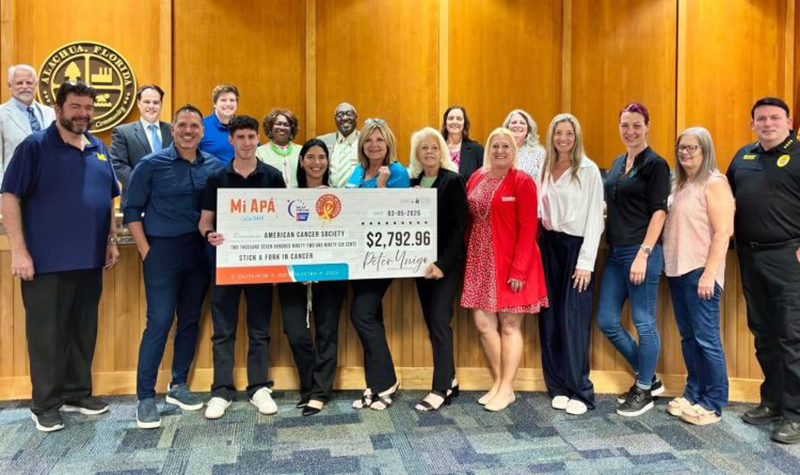
Alachua Chamber of Commerce representatives, Mi Apa Latin Cafe staff and local officials pose during a recent Alachua City Commission meeting after the presentation of a $2,792.96 donation supporting the American Cancer Society through the “Stick A Fork in Cancer” fundraiser./Photo special to Alachua County Today

Local

ALACHUA A local restaurant’s community-driven fundraiser delivered nearly $2,800 to support cancer research and patient services, with the presentation made during a City Commission meeting.

The Alachua Chamber of Commerce Relay For Life Team accepted a $2,792.96 donation from Mi Apa Latin Cafe, presented by owner Peter Ynigo, as part of the restaurant’s annual “Stick A Fork in Cancer” initiative benefiting the American Cancer Society.

The fundraiser on March 5, 2026, brought together a mix of community leaders and volunteers who stepped out of their usual roles to serve diners. Police officers, city officials, commissioners and Chamber board members joined Mi Apa staff as “celebrity servers,” helping collect tips that were ultimately donated to the cause.

“Last month’s event was truly special, as police officers, city officials, commissioners, Chamber board members, and yes, even a few of us, stepped in as celebrity servers alongside the amazing Mi Apa team,” said Alachua Chamber President Shelley Vickers. “Together, we served our community, raised funds, and shared a lot of smiles along the way.”

Vickers credited the restaurant’s team for making the contribution possible.

“A heartfelt thank you to Peter, Freddie Wehbe, and the entire Mi Apa team for their continued generosity and unwavering support of this important cause,” she said. “We are especially grateful to the staff who donated all of their tips to make this contribution possible.”

She also recognized the volunteers who participated in the event.

“We’d also like to recognize our dedicated volunteer servers from the City of Alachua Commission, Alachua Police Department, and the Alachua Chamber Board,” Vickers said. “Your time, energy, and servant hearts made a meaningful impact in the fight against cancer.”

The annual “Stick A Fork in Cancer” event is part of broader Relay For Life activities held in Alachua, which aim to raise awareness and funds for the American Cancer Society through community-based events.

“This is what community looks like, coming together, giving back, and making a difference,” Vickers added.

#     #     #

email editor@

alachuatoday.com

Add a comment

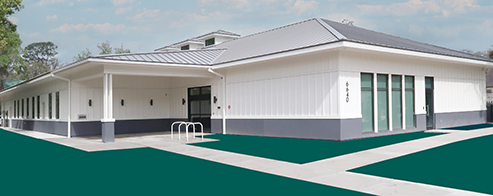
The new Hawthorne Branch library, located at 6640 S.E. 221 St., will open to the public Saturday, April 25, 2026, with a ribbon-cutting ceremony and tours. The expanded facility includes dedicated spaces for children, teens and community use, along with a MakerSpace offering access to creative tools and technology./Rendering special to Alachua County Today

Local

HAWTHORNE A new chapter for public access, learning and community connection will begin Saturday morning as the Alachua County Library District opens its new Hawthorne Branch, a facility designed to expand services and create gathering space in a city where the library has long served as a central hub.

A grand opening ceremony and ribbon cutting is scheduled for 9:30 a.m. on April 25, 2026, at the branch’s new location, 6640 S.E. 221st Street, followed by self-guided tours of the building.

The new branch replaces the previous location with a larger, modern facility that library officials say reflects years of planning and a broader effort to strengthen library infrastructure across Alachua County. Construction on the building began in early February 2026 and was completed in time for the spring opening.

For residents of Hawthorne, the expansion represents more than just a new building. It adds dedicated spaces for children, teens, students and adults, reinforcing the library’s role as both an educational resource and a community meeting place.

The branch includes a “Snuggle-Up Center” for young children and families, a designated Teen Space, a Quiet Reading Room and two study rooms. A meeting room provides space for local groups and programming, while a new MakerSpace introduces access to creative tools and technology.

Library officials say the MakerSpace is intended to give residents hands-on opportunities with equipment and digital resources that might otherwise be out of reach.

The Hawthorne project is part of a long-term capital improvement strategy by the Library District, which since the early 2000s has focused on renovating, expanding and building facilities to meet the needs of a growing and evolving population.

“We hope the new Hawthorne Branch will bring more opportunities for patrons to participate, connect, and discover all the wonderful library services the Alachua County Library District has to offer,” said Library Director Shaney Livingston.

Beyond books and computers, library leaders say the new space is designed to support community life — offering a place for students to study, families to gather, residents to attend programs and individuals to access technology and information.

In smaller communities like Hawthorne, where public spaces can be limited, the library often serves as a central, accessible venue for civic engagement, education and social connection. The expanded branch aims to build on that role, providing a modern, flexible environment for residents of all ages.

Saturday’s opening invites the public not only to tour the building, but to see firsthand how the new branch is positioned to serve as a cornerstone of the community for years to come.

#     #     #

email editor@

alachuatoday.com

Add a comment

HIGH SPRINGS – One of two women pulled unresponsive from the water at Poe Springs Park on Sunday has died, while the second remains hospitalized in critical condition, according to the Alachua County Sheriff’s Office.

Deputies responded shortly before 4 p.m. April 19, 2026, to the popular spring following a report of a possible drowning. The caller reported that two individuals had been removed from the water and were unconscious.

Authorities said a teenage snorkeler located the women in the water, pulled them to shore and contacted emergency services. A bystander with medical training then began CPR before deputies, High Springs Fire Department personnel and Alachua County Fire Rescue paramedics arrived and continued life-saving efforts.

Both women were transported to a nearby hospital. Officials said a woman in her late 20s later died, while another woman in her mid-20s remained in critical condition as of the latest update.

Preliminary information indicates the incident began when one woman was walking along the edge of the spring and fell into the water, where she began to struggle. A second woman entered the water in an attempt to help but was also pulled under.

When others nearby realized the two had not resurfaced, they entered the water and assisted in bringing them back to shore, where CPR was initiated.

As a precaution, the Sheriff’s Office Marine Operations Underwater Recovery Team searched the area to ensure no additional victims were involved.

“This remains an active investigation and no further details are available at this time,” the Sheriff’s Office said in a statement.

Authorities also acknowledged those who responded before emergency crews arrived.

“We are deeply grateful to the citizens who acted quickly in a dangerous and uncertain situation,” the agency said. “Their willingness to help made a critical difference.”

Officials also thanked the High Springs Police Department and High Springs Fire Department for their assistance.

Poe Springs Park, located along the Santa Fe River, is a popular destination for swimming and recreation, particularly during warmer months. The incident serves as a reminder of the potential dangers even in familiar natural settings.

Authorities have not released the identities of the women as the investigation continues.

#     #     #

email editor@

alachuatoday.com

Add a comment

TALLAHASSEE – United States Attorney John P. Heekin highlighted a year of expanded prosecutions, civil recoveries and appellate work in a summary of the U.S. Attorney’s Office for the Northern District of Florida’s accomplishments during 2025.

In announcing the annual summary, Heekin said the office advanced the priorities of the U.S. Department of Justice while focusing on public safety and enforcement across northern Florida.

“This past year was momentous for the United States Attorney’s Office for the Northern District of Florida as we capably answered the calls to action by President Donald J. Trump and Attorney General Pam Bondi while fulfilling the vital mission of the Department of Justice,” Heekin said. “Through our work, we have demonstrated our unwavering commitment to the rule of law and the safety and well-being of our communities.”

Heekin credited partnerships with federal, state and local law enforcement agencies and said those relationships would continue to be strengthened in 2026 “as we strive toward delivering safe streets for our residents.”

Criminal Division activity

The U.S. Attorney’s Office divides its federal casework among three divisions: Criminal, Civil and Appellate.

According to the annual summary, the Criminal Division played a central role in enforcement efforts during 2025 through Operation Take Back America, a Department of Justice initiative aimed at addressing illegal immigration, dismantling cartels and transnational criminal organizations, and combating violent crime, drug trafficking and human trafficking.

During calendar year 2025, prosecutors in the Northern District of Florida reported:

  • 391 criminal defendants charged;
  • 293 guilty pleas entered;
  • 35 criminal jury trials conducted;
  • 984 direct contacts with crime victims; and
  • 9,818 written notifications issued to crime victims.

The office said those efforts focused on communities impacted by illegal drugs and criminal violence.

Civil Division recoveries

The Civil Division represents the United States in civil litigation, defends federal agencies and employees, and pursues affirmative cases to recover funds lost to fraud or improper claims. The division also enforces criminal and civil monetary judgments through its Financial Litigation Program.

In 2025, the Civil Division reported:

  • Representation of federal agencies in 53 newly filed defensive cases;
  • Recovery of $1.7 million through settlements resolving false claims against the federal government;
  • Collection of $6.4 million in criminal money judgments;
  • Nearly $4 million applied toward victim restitution through asset forfeiture restoration; and
  • More than $1 million distributed to state and local law enforcement agencies through the Equitable Sharing Program.

Appellate work

The Appellate Division represents the government in appeals before the 11th U.S. Circuit Court of Appeals. During 2025, the division handled:

  • 105 appeals, including 93 criminal and 12 civil appeals;
  • 113 responses to post-conviction motions; and
  • 80 appellate decisions affirming district court rulings in favor of the government.

Looking ahead

“The substantial accomplishments of 2025 are merely the foundation upon which we will build even greater achievements in 2026,” Heekin said.

He added that expectations set by the president and attorney general call for continued focus on public safety and oversight of federal programs.

“In 2026, we will remain tireless in our pursuit of justice on behalf of our citizens and committed to making the Northern District of Florida the absolute best – and safest – place in America to live, work and raise a family,” Heekin said.

More information about the Northern District of Florida’s responsibilities and divisions is available through the Department of Justice.

#     #     #

Email cwalker@

alachuatoday.com

Add a comment

The following is a press release provided by Florida TaxWatch. It has been published here as received, without additional reporting or editing by Alachua County Today staff. ~ 

Tallahassee, Fla. – Today, Florida TaxWatch released a second report, Save Our Taxpayers – Property Tax Relief Must be Accomplished Equitably, as a follow up to its original report Options to Eliminate or Reduce the Property Tax Burden on Florida Homeowners primer, as the 2026 Legislative Session commences. This report examines the Florida House of Representative’s proposals, provides the fiscal impact of each, and calls for a ‘Save Our Taxpayers’ ballot amendment for equitable property tax relief.

Property taxes are by far the largest source of tax revenue for Florida’s local governments, generating $59.2 billion in FY2025-26 for counties, school districts, municipalities, and special districts, and that amount is rising rapidly. Of this total, more than $20 billion is paid by Florida homeowners. This revenue funds critical government services such as public safety, fire protection, education, and sanitation.

Florida TaxWatch President and CEO Jeff Kottkamp said, “While the Governor and many in the Legislature want to bring a property tax relief proposal to the voters in 2026, they are far from a consensus of what that proposal will look like. Property tax levies, fueled by rising property values, are increasing rapidly in Florida. They have more than doubled in the last 10 years, including 50 percent growth in the last four years. In turn, many local government budgets have dramatically increased over the last 10 years.

“Providing property tax relief to Florida taxpayers is commendable and the focus on homestead property by the Governor and the Legislature is understandable. But putting a proposal on the 2026 ballot to eliminate all property taxes, without also addressing ever escalating local government spending, is not advisable.

“Florida TaxWatch provides six recommendations, with actionable items, calling for a ‘Save Our Taxpayers’ amendment to replace the current inadequate 10 percent non-homestead assessment cap with one that matches the Save Our Homes cap of the lesser of three percent or inflation for all property owners. We look forward to working with policymakers to ensure property tax relief is equitable for all of Florida’s hardworking taxpayers.”

Those who have been bearing the brunt of rising property taxes should not be forgotten. This includes renters, businesses, people renovating or building an addition to their home, people moving to Florida, and new homeowners. Almost all of the proposals before the Legislature would increase the tax shift from homestead to non-homestead property that already stands at more than $10 billion and growing.

The time is right for a “Save Our Taxpayers” cap to be created, limiting the increases in assessments for both homestead and non-homestead property at the same growth rate. This has been a long-standing Florida TaxWatch recommendation and its research helped to get the constitutional amendment on the ballot that created the 10 percent homestead cap in 2008.

Based on the findings in this report, Florida TaxWatch recommends:

  1. The Legislature should not attempt to put a constitutional amendment on the November 2026 ballot to eliminate all property taxes, even if it is limited to non-school property tax levies. Undertaking such a major change in Florida’s tax system should not be attempted without a comprehensive reform plan, including local government efficiency and fiscal responsibility, ensuring the provision of critical government services, and safeguards against the shifting taxes to non-homestead properties.
  1. A “Save Our Taxpayers” amendment should be put before the voters to replace the current inadequate 10 percent non-homestead assessment cap with one that matches the Save Our Homes cap of the lesser of three percent or inflation. This would help stop the current tax shift and ensure that all taxpayers are treated more fairly.
  1. The Legislature should create an additional exemption for new homeowners—for example, 25 percent of the new home’s initial assessed value. This could be structured so that the new homeowner would have an immediate 25 percent reduction in value which would then be phased out (dollar for dollar) as their Save Our Homes differential increases. This would reduce the cost of buying a home, especially in the first year, helping more Floridians achieve the goal of homeownership.
  1. If the Legislature wants to create a new homestead exemption, it should consider making the amount equal to a percentage of the median home value in the county where the home is located. Instead of a the same “one size fits all” amount for all homes statewide, tying the size of the exemption to each home’s value would make the tax savings relatively greater for those in the county with lower home values and therefore likely lower incomes. By acknowledging the difference in median home values between counties, it could help fiscally constrained counties deal with the revenue loss.
  1. Any new property tax benefit for homestead property only should be accompanied by a requirement that local governments adopt the rolled-back rate after adding back any taxable value lost to the new exemption, at least temporarily. This would ensure that tax burden is not shifted to other properties, but also that taxpayers receive the full value of the exemption the Legislature (and voters) expected.
  1. The Legislature should reform the Value Adjustment Board system, especially increasing the independence of VABs from the local officials that spend the money. A three percent success rate for taxpayers challenging their assessments (for people outside of Miami-Dade County) does not indicate a fair system.

Florida TaxWatch also examines the Florida House of Representatives’ seven proposed constitutional amendments and one statutory change, including the fiscal impact of each, which may be found on pages 5 through 8 here.

About Florida TaxWatch
As an independent, nonpartisan, nonprofit government watchdog and taxpayer research institute, and the trusted “eyes and ears” of Florida taxpayers for more than 45 years, Florida TaxWatch (FTW) works to improve the productivity and accountability of Florida government. Its research recommends productivity enhancements and explains the statewide impact of fiscal and economic policies and practices on taxpayers and businesses. FTW is supported by its membership via voluntary, tax-deductible donations and private grants. Donations provide a solid, lasting foundation that has enabled FTW to bring about a more effective, responsive government that is more accountable to, and productive for, the taxpayers it has served since 1979. For more information, please visit www.floridataxwatch.org.

#     #     #

email editor@

alachuatoday.com

Add a comment

The following is a press release provided by the office of Governor Ron DeSantis. It has been published here as received, without additional reporting or editing by Alachua County Today staff. ~ 

JACKSONVILLE, Fla.—Today, Governor Ron DeSantis joined First Lady Casey DeSantis and Mayo Clinic President and CEO Dr. Kent Thielen to announce that Mayo Clinic in Jacksonville is launching the first carbon ion therapy program in America and the only carbon ion therapy program in the Western Hemisphere.

“Our administration is committed to fighting cancer by making targeted investments in innovative therapies that have the potential to save lives," said Governor Ron DeSantis. "During my time as governor, we’ve increased funding for cancer research and treatment programs by more than 114 percent. The Casey DeSantis Cancer Research Program has strengthened Florida’s position as a national leader in cancer research and innovation. We’re proud that Mayo Clinic chose Florida as the home for this groundbreaking initiative, and we look forward to seeing how these cutting-edge therapies give hope to patients fighting some of the most aggressive and treatment-resistant cancers.”

In June 2025, Mayo Clinic opened the 228,000-square-foot Duan Family Building in Jacksonville to expand cancer treatment and research. The new facility will be uniquely designed to deliver both carbon ion therapy and proton therapy, including the ability to treat the same tumor with either approach for greater precision.

“Under the Governor’s leadership, Florida continues to lead in innovation, and today at Mayo Clinic Jacksonville, we are proving that this leadership extends beyond our state, transforming not only how we care for Floridians, but also how the rest of America approaches cancer treatment,” said First Lady Casey DeSantis. “This state-of-the-art technology was made possible, in part, through funding from the Casey DeSantis Cancer Research Program.”

Mayo Clinic expects proton therapy to begin in 2027 and carbon ion therapy to begin in 2028. Patients will benefit from expanded care well before then through additional services already being offered at the facility, including photon therapy, immunotherapy, CAR-T cell therapy, advanced imaging, and other specialized cancer services.

Carbon ion therapy is one of the most advanced radiation treatment technologies in the world, designed for hard-to-treat and treatment-resistant cancers. Until now, the therapy has only been available at a limited number of centers in Asia and Europe.

Florida continues to invest heavily in cancer research and treatment. Since 2019, Florida has invested more than $1 billion, increasing cancer program funding by more than 114% and committing nearly $218 million for cancer research in 2025 alone.

#     #     #

email editor@

alachuatoday.com

Add a comment

TALLAHASSEE – On Dec. 18, 2025, Governor Ron DeSantis announced a total of $311 million in awards to improve infrastructure in 37 Florida communities, which includes 32 awards to rural counties and small cities. These awards come from funding through both the Community Development Block Grant-Disaster Recovery (CDBG-DR) Infrastructure Repair Program, helping communities impacted by the 2023 and 2024 Storms—Hurricanes Idalia, Debby, Helene, Milton and the 2024 North Florida Tornadoes and funding from the Rural Infrastructure Fund (RIF). These awards invest in critical infrastructure needs ranging from utility and transportation improvements to emergency operations resources in these communities—especially supporting critical water infrastructure investments across the state.

“Today in Highlands County, I was proud to announce $311 million in grant awards to improve infrastructure in 37 communities across Florida impacted by the major storms of 2023 and 2024—Hurricanes Idalia, Debby, Helene, Milton and the North Florida Tornadoes,” said Governor Ron DeSantis. “These infrastructure projects will help make Florida more prosperous, more resilient, and better prepared to weather any storms that may come our way.”

“These awards directly support job creation by providing communities with the critical infrastructure to embolden their vision for resiliency and business formation,” said Florida Secretary of Commerce J. Alex Kelly. “Whether it’s upgrading utilities, developing pad ready manufacturing sites, or improving essential services, these projects help small and rural communities attract job creators, bolster their workforce and build a thriving economic future.”

The following communities will receive funds through the 2023 and 2024 Storms Community Development Block Grant-Disaster Recovery (CDBG-DR) Infrastructure Repair Program:

 
  • Bradford County Board of County Commissioners ($5,951,403) - to structurally reinforce the roadway by adding base, pavement and re-establish the roadside swales by regrading and adding erosion protection.
  • Citrus County Board of County Commissioners ($16,435,400) – to support the replacement of a sanitary sewer system following stormwater intrusion and increased flows caused by the 2023 and 2024 storms. Upgrading these systems will expand capacity and help alleviate long-standing constraints on the county’s ability to grow, supporting future business development.  
  • City of Arcadia 
    o   $14,233,044 – to widen the main stormwater channel in the city,         providing additional storage during storms.  
    o   $8,514,000 – to construct and expand the wastewater treatment plant. 
  • City of Live Oak ($3,895,500) – to construct a 100,000-gallon water storage tank and support a water line loop project.  
  • City of Macclenny ($7,028,700) – to harden and modernize the Ohio Street Water Treatment Plant by upgrading and improving software and equipment. 
  • City of Palatka ($4,932,396) - to harden and expand the capacity of the city’s wastewater treatment plant to handle future wet weather surges. 
  • City of Wauchula ($2,386,500) – to support wastewater system repairs, rehabilitation and floodwater mitigation.  
  • Columbia County Board of County Commissioners ($4,000,000) – to upgrade and harden community shelters in Columbia County.  
  • DeSoto County Board of County Commissioners ($8,000,000) – to construct and install wells and a pumping system to connect the wastewater treatment plant to the disposal wells—providing a more secure, underground disposal method for treated wastewater.  
  • Hardee County Board of County Commissioners ($1,900,000) – to remove vegetative debris from the Peace River Waterway system. 
  • Jacksonville Electric Authority ($20,000,000) – to redirect all wastewater flows to Jacksonville Electric Authority’s existing, reliable wastewater treatment facility.   
  • Okeechobee County Board of County Commissioners ($2,720,000) – to rehabilitate, preserve and harden five critical county-owned bridges.  
  • Peace River Watershed Project ($70,000,000) – to support the water infrastructure repair project in Polk County—ensuring restoration and resiliency that manages flood risk and water quality impairment through habitat restoration.  
  • Santa Fe College ($5,000,000) – to repair and upgrade the campus gymnasium due to significant roof damage from the 2023 and 2024 Storms.  
  • Sebring Airport Authority ($3,044,630) – to demolish and replace the existing stormwater system and associated infrastructure at Sebring Regional Airport and Multimodal Logistics Center. 
  • Suwannee County Board of County Commissioners ($38,044,115) – to construct the North Florida Regional Special Needs Emergency Shelter.   
  • Town of Glen St. Mary ($1,339,500) – to harden the wastewater collection system by installing permanent standby generators for the sanitary sewer lift stations.  
  • Town of St. Lucie Village ($12,124,812) – to construct a resilient, centralized potable water supply system for the town’s public use. 
  • Union County Board of County Commissioners ($1,401,750) – to construct a hardened public safety communications tower and upgrade the county’s current emergency dispatch system.  
  • Village of Indiantown  
    o   $9,300,000 – to construct a new Reverse Osmosis water treatment plant, replacing existing outdated systems.  
    o   $7,900,000 – to replace 13,000 linear feet of the main water transmission main for the Village. 

In addition to the $400 million in IRP funding, an allotment of $50 million has been allocated by HUD to eligible counties and municipalities located in 2023 and 2024 Storms' Most Impacted and Distressed (MID) areas affected by Hurricane Ian.

The following communities will receive funds under both Hurricane Ian and the 2023 and 2024 Storms Community Development Block Grant (CDBG-DR) Infrastructure Repair Program:
 
  • City of Avon Park ($22,248,529) – to assess, evaluate, repair, sleeve or rebuild the facilities at the City of Avon Park’s Sanitary Sewer Collection System.
  • Immokalee Water and Sewer District ($10,823,000) – to improve the existing wastewater treatment plant, addressing hydraulic imbalances, enhancing treatment reliability and providing surge capacity necessary to manage extreme wet-weather inflows.
  • Town of Dundee
    o   $6,008,781 – to harden the town’s sanitary sewer collection system and install monitoring equipment at the town’s wastewater treatment plant. 
      $10,257,429 – to repair damage and harden the town’s potable water system.
 
The RIF program supports infrastructure projects that drive job creation, capital investment, and strengthen economies in Rural Areas of Opportunity (RAO), rural counties and rural communities. For Fiscal Year (FY) 2025-2026, the Florida Legislature appropriated $17 million for the RIF statewide program and $5 million for the Panhandle-Specific program for a total of $22 million. FloridaCommerce received a record 112 applications requesting more than $195 million in funding during the 2025-2026 RIF application period. Since 2019, the program has awarded more than $110 million in grant funds.

The following communities will receive funds through the Rural Infrastructure Fund Program: 

  • City of Frostproof ($238,991) – to extend an existing water main, designing a 12-inch loop allowing for extension to the area proposed as the Duke Readiness Center. 
  • City of Lake City ($1,788,415) – to replace a hangar at the Lake City Gateway Airport significantly damaged by Hurricane Idalia.  
  • City of Okeechobee ($1,200,000) – to support a construction project aimed at improving public infrastructure, facilitating expansion within an existing industrial site, including the resurfacing of two major roads that provide access to the Okeechobee Commerce Center. 
  • City of Wauchula ($510,000) – to enhance the existing water distribution system by installing approximately 7,100 linear feet of water main, enhancing fire protection along Townsend Street to U.S. Highway 17. 
  • Columbia County Board of County Commissioners ($2,000,000) – to construct an inbound and outbound rail track serving the North Florida Mega Industrial Park.  
  • Hardee County ($250,000) – to build a dewatering facility, reducing long-term disposal costs. 
  • Hardee County Industrial Development Authority ($226,250) – to continue their centralized parking construction, including the relocation of electrical utilities underground. 
  • Keystone Heights Airport Authority ($2,950,450) – to construct a runway extension to Runway 2.   
  • Okeechobee Utility Authority ($1,000,000) – to install pipe and corresponding water mains to connect previously completed water infrastructure. 
  • Putnam County Board of County Commissioners ($3,000,000) – to construct and commission critical public infrastructure at the Central Landfill in Putnam County.  
  • Town of Zolfo Springs ($300,000) – to conduct a comprehensive Sanitary Sewer Evaluation Survey which will identify infiltration and inflow sources and address challenges from power outages, lift station failures and aging infrastructure.  

#     #     #

email editor@

alachuatoday.com


Add a comment

TALLAHASSEE – Florida students are invited to take part in the 2025 Native American Heritage Month art and essay contests, celebrating this year’s theme: “Celebrating Florida’s Native American Heritage,” according to an announcement Thursday from the Florida Department of Education and Volunteer Florida.

Native American Heritage Month is observed nationwide each November and serves as a time to acknowledge the cultural, historical and artistic contributions of Native Americans. This year’s contests are designed to encourage students across all grade levels to explore and share stories of Florida’s Native American leaders, artists and historical figures.

“We are proud to offer students opportunities to learn from and honor the Native Americans who have shaped Florida’s story,” said Commissioner of Education Anastasios Kamoutsas. “I encourage every student to learn about our Native American history and discover the remarkable achievements they made.”

Volunteer Florida CEO Josie Tamayo echoed the message, stating, “I am proud to celebrate the culture and heritage of Native Americans who enrich the value of our Nation. During Native American Heritage Month, we honor the many contributions of Native American Floridians.”

Art Contest Details

All Florida students are eligible to participate. Students in grades K–3 may enter the art contest by submitting one original, two-dimensional piece of artwork reflecting this year’s theme. Four statewide winners will be selected, with each receiving a $200 gift card for school supplies and a one-year pass to Florida State Parks.

Essay Contest Details

Students in grades 4–12 may enter the essay contest. Six winners will be chosen—two from each grade level group (4–5, 6–8, 9–12). Each winning essayist will receive a two-year Florida College Plan scholarship from the Florida Prepaid College Foundation and a $200 school-supply gift card. Essays must be written in English, no longer than 500 words, and focus on a Native American Floridian who has had a meaningful impact on the state’s history or culture.

Examples of suggested subjects include Betty Mae Tiger Jumper, the first woman elected Chair of the Seminole Tribe of Florida; Ulele, sometimes referred to as “Florida’s Timucuan Pocahontas”; Osceola, a prominent advocate for Seminole rights in the 1800s; and Noah Billie, a noted Seminole painter.

Excellence in Education Award

The Governor’s Native American Heritage Month Excellence in Education Award is open to all full-time educators in Florida’s elementary, middle and high schools. Four winners will be selected. Nominations may be submitted by teachers, principals, parents, guardians or students. Winners will receive $2,500 from Volunteer Florida.

How to Enter

Contest entry forms and educator nomination forms may be submitted online or mailed to:

Volunteer Florida

Native American Heritage Month Committee

1545 Raymond Diehl Road, Suite 250

Tallahassee, Florida 32308

All entries must be received by 5 p.m. Eastern Time on Friday, Nov. 21, 2025. Additional information is available at www.floridanativeamericanheritage.com.

#     #     #

Email cwalker@

alachuatoday.com

Add a comment

JACKSONVILLE, Fla. —Today, Governor Ron DeSantis and First Lady Casey DeSantis announced Florida awards $30 million in grant funding to four specialty children’s hospitals in Florida to develop and improve access to clinical trials, advance treatment protocols, and discover cures for childhood cancer. Johns Hopkins All Children’s Hospital in St. Petersburg, Nemour’s Children’s Hospital in Orlando, Nicklaus Children’s Hospital in Miami, and Wolfson Children’s Hospital in Jacksonville were each awarded $7.5 million.

“Since I became governor, Florida has invested more than $1 billion in cancer research and treatment—a 114% increase. We created the Cancer Connect Collaborative Research Incubator program within the Florida Department of Health this year to enhance cancer research throughout Florida,” said Governor Ron DeSantis. “Four of Florida’s top children’s hospitals have received a total of $30 million in funding for their innovative proposals to help children and adolescents who are fighting cancer. By investing in statewide infrastructure for pediatric cancer initiatives, we aim to eliminate the need for Florida families to travel out of state for potentially life-saving experimental therapies and specialized care.”

The Cancer Connect Collaborative Research Incubator was created in 2025 to further Florida efforts as a leader in cancer research and treatment. The Incubator is funded with $30 million and will focus on pediatric cancer in its first five-year funding cycle. While pediatric cancer accounts for just one percent of cases nationally, Florida’s pediatric cancer population is significant, with the state accounting for six percent of all new pediatric cancer cases in the U.S., thereby impacting thousands of children and families every year.

“Research Incubator investments to advance research, prevention, and treatment for pediatric cancer represents a meaningful step forward in our mission to improve outcomes, strengthen families, and ensure that every child has access to the most advanced care possible right here in Florida,” said First Lady Casey DeSantis. “I’m deeply grateful to Governor DeSantis for his unwavering leadership and commitment to advancing cancer research in Florida.”

“Thanks to the vision and leadership of First Lady Casey DeSantis, Florida continues to set the national standard for advancing adult and childhood cancer research and care,” said State Surgeon General Dr. Joseph A Ladapo. “Through the Cancer Connect Collaborative Research Incubator, we’re not only investing in science—we’re investing in hope for children and families across the state.”

The Incubator is part of Florida’s Cancer Connect Collaborative, an innovative model designed to accelerate research, share best practices, and turn data into actionable results. Guided by five pillars—Data, Best Practices, Innovation, Honesty, and Funding—the initiative brings together public and private partners to reshape cancer care delivery.

“Thanks to the leadership of First Lady and Governor DeSantis, Florida continues to make cancer research and treatment a top priority,” said Agency for Health Care Administration Secretary Shevaun Harris. “The Cancer Connect Collaborative Research Incubator is a bold step forward, beginning with pediatric cancer research. We look forward to seeing the strides made among the awardees and the collaboration that will accelerate breakthroughs, improve access to therapies, and offer hope to families across our state.”

#     #     #

email editor@

alachuatoday.com

Add a comment

Acetaminophen — best known today by the brand name Tylenol — is one of the most widely used pain relievers in the world. But its path from laboratory discovery to medicine cabinet staple spans more than a century and includes missteps, rediscovery and one William Garst HSof the most significant public health crises in modern pharmaceutical history.


Early discovery and setbacks

Acetaminophen was first synthesized in 1878 by chemist Harmon Northrop Morse, but its medical potential was not immediately recognized.

In the late 1800s, researchers began exploring related compounds as treatments for fever. In 1886, German physicians Arnold Cahn and Paul Hepp inadvertently discovered the fever-reducing properties of acetanilide after administering it by mistake while treating a patient. The drug was later marketed under the name Antifebrin.

Concerns about side effects soon led scientists to investigate alternatives. Phenacetin was introduced in 1887, and acetaminophen itself was used for pain and fever by 1893. However, early concerns — later determined to be unfounded — limited its adoption.

It was not until the 1940s that researchers determined both acetanilide and phenacetin were metabolized by the body into acetaminophen, identifying it as the true source of their therapeutic effects.

The rise of Tylenol

Renewed interest in acetaminophen grew in the 1950s, particularly as researchers sought safer alternatives to aspirin, which was associated with stomach irritation and other risks.

In 1955, McNeil Laboratories introduced Tylenol Elixir for Children, the first single-ingredient acetaminophen product marketed under the now-familiar brand name. The name “Tylenol” was derived from the drug’s chemical structure.

Initially available by prescription, Tylenol gained over-the-counter status in 1960, significantly expanding its reach. Its positioning as a safer option for children and adults helped drive widespread adoption.

A crisis that reshaped the industry

Tylenol’s dominance was challenged in 1982 during a crisis that would permanently change pharmaceutical safety standards.

Seven people in the Chicago area died after ingesting Extra Strength Tylenol capsules that had been laced with potassium cyanide after leaving the manufacturing facility. The incident prompted a nationwide recall of approximately 31 million bottles.

In response, manufacturer Johnson & Johnson implemented sweeping safety measures, including the introduction of tamper-resistant packaging and new pill designs such as the caplet, which is more difficult to alter than traditional capsules.

The incident led to federal action, including legislation making product tampering a crime and the establishment of U.S. Food and Drug Administration guidelines requiring tamper-evident packaging for over-the-counter medications.

A global staple

Today, acetaminophen is one of the most commonly used medications worldwide for pain relief and fever reduction. Its widespread availability and long track record have made it a standard recommendation in both clinical and household settings.

*     *     *

William Garst is a consultant pharmacist who lives in Alachua, Florida. He is semi-retired and works part time at Lake Butler Hospital in Lake Butler, Florida. William received his pharmacy degree at Auburn University and a Doctor of Pharmacy from Colorado University. The Pharmacy Newsletter is a blog where you can find other informative columns. He may be contacted at garstcph@gmail.com.

#     #     #

Email editor@

alachuatoday.com

Add a comment

Neuropathy is essentially a “glitch” in your body’s electrical system. It occurs when nerves — usually the peripheral nerves outside of your brain and spinal cord — become damaged or destroyed.

William Garst HS
Instead of sending clear signals to your brain, these damaged nerves might send “phantom” pain signals, or stop sending signals altogether. It often feels like tingling, burning, or a numb “pins and needles” sensation, typically starting in the hands or feet.

Common Medications for Neuropathy

Treating neuropathy is usually a two-front war: managing the pain and addressing the underlying cause (like diabetes or vitamin deficiencies). Because “normal” painkillers like ibuprofen often don't touch nerve pain, doctors usually turn to these categories:

Anticonvulsants (Seizure Meds)

These are often the first line of defense. They work by "calming down" the overactive nerve cells that are firing off pain signals.

  • Gabapentin (Neurontin): Very common; helps dampen the intensity of nerve firing.
  • Pregabalin (Lyrica): Similar to Gabapentin but often works faster and is more easily absorbed.

Antidepressants

You don't have to be depressed to take these for neuropathy. They interfere with the chemical processes in your brain and spinal cord that cause you to feel pain.

  • SNRIs (e.g., Duloxetine/Cymbalta): Often used for diabetic neuropathy.
  • Tricyclic Antidepressants (e.g., Amitriptyline): Older meds that are very effective for nerve pain, though they can cause drowsiness.

Topical Treatments

If the pain is localized to a specific spot, sometimes it's better to treat the skin directly rather than taking a pill.

  • Lidocaine Patches: Numb the area temporarily.
  • Capsaicin Cream: Derived from chili peppers; it can actually “exhaust” the pain messengers in your nerves, though it might sting at first.

Pain Relievers

  • OTC Meds: Acetaminophen or NSAIDs (Advil/Aleve) might help with mild symptoms but are generally less effective for deep nerve damage.
  • Opioids: Generally considered a last resort due to the risk of addiction and the fact that they aren't always effective for chronic nerve pain.

              Prosper and be in health.


William Garst is a consultant pharmacist who lives in Alachua, Florida. He is semi-retired and works part time at Lake Butler Hospital in Lake Butler, Florida. William received his pharmacy degree at Auburn University and a Doctor of Pharmacy from Colorado University. The Pharmacy Newsletter is a blog where you can find other informative columns. He may be contacted at garstcph@gmail.com.

#     #     #

Email editor@

alachuatoday.com

Add a comment

William Garst HSUsing an inhaler seems straightforward, but it’s actually a high-precision task. If the technique isn't quite right, the medication often ends up hitting the back of your throat instead of reaching your lungs where it’s needed.

Here is a guide to help you master the puff.

The Pre-Game Checklist

Before you even take a breath, make sure the device is ready to perform.


  • Check the Dose Counter: It sounds obvious, but many people keep “puffing” an empty canister. If it’s in the red or at zero, it's time for a replacement.
  • Shake it Up: Most Metered-Dose Inhalers (MDIs) are suspensions. Shake the inhaler for 5 seconds to mix the medicine with the propellant. (Note: Dry Powder Inhalers do not need shaking).
  • Prime the Pump: If you haven’t used the inhaler in a few days (or if it’s brand new), spray it twice into the air to ensure the next dose is full strength.

Perfecting the Technique

The goal is to create a clear “highway” for the mist or powder to travel down.

For Metered-Dose Inhalers (MDIs - the “L” shaped ones)

  1. Exhale Fully: Breathe out away from the inhaler until your lungs feel empty. This creates space for the medication.
  2. Posture Matters: Sit up straight or stand. Tilt your chin up slightly to straighten the airway.
  3. The Slow Sip: Start inhaling slowly and deeply just as you press the canister. Think of it like a long, steady straw sip, not a quick gasp.
  4. The 10-Second Hold: Hold your breath for 10 seconds (or as long as comfortable) to let the particles settle deep in the lungs.

For Dry Powder Inhalers (DPIs - like Diskus or Ellipta)

  • The Quick Snap: Unlike MDIs, DPIs require a quick, forceful breath to “suck” the powder out.
  • Keep it Dry: Never exhale into a DPI, as the moisture from your breath can clump the powder.

Pro-Tips for Better Results

Tip

Why it Matters

Use a Spacer

For MDIs, a spacer (valved holding chamber) catches the “mist” so you can breathe it in naturally. It's often more effective than "open mouth" techniques.

The 60-Second Rule

If you need two puffs of the same med, wait about one minute between them. This allows the lungs to open slightly from the first puff, making the second more effective. This is not true for inhaled corticosteroids and unlikely to make a difference with albuterol in most cases

Rinse and Spit

If your inhaler contains a steroid (preventer), always rinse your mouth with water and spit it out afterward to prevent oral thrush (a yeast infection).

Maintenance & Storage

  • Clean the Plastic: Once a week, remove the metal canister and wash the plastic actuator with warm water. Let it air dry. Clogged nozzles lead to uneven doses.
  • Temperature Control: Don't leave inhalers in a hot car. Extreme heat can cause the canister to burst or the medication to degrade.

Common Mistake to Avoid

The “Tongue Block”: Make sure your tongue is on the floor of your mouth. If your tongue is up, it acts like a shield, and the medicine just sticks to it instead of going down your windpipe.

*     *     *

William Garst is a consultant pharmacist who lives in Alachua, Florida. He is semi-retired and works part time at Lake Butler Hospital in Lake Butler, Florida. William received his pharmacy degree at Auburn University and a Doctor of Pharmacy from Colorado University. The Pharmacy Newsletter is a blog where you can find other informative columns. He may be contacted at garstcph@gmail.com.

#     #     #

Email editor@

alachuatoday.com

Add a comment

Managing glaucoma requires a commitment to a daily routine. Because glaucoma is often “silent” (meaning you won't feel your eye pressure rising), the medications are your primary defense against permanent vision loss.

William Garst HS
Here are five essential things every patient should know about glaucoma medications:

  1. Consistency is Your Most Powerful Tool

Glaucoma eye drops only work for a specific window of time (usually 12 to 24 hours). If you skip a dose, your eye pressure can spike, causing “silent” damage to the optic nerve.

  • The Goal: Maintain a steady level of medication in your eye around the clock.
  • Pro-Tip: Tie your drop schedule to a daily habit, like brushing your teeth or having your morning coffee, to ensure you never miss a dose.
  1. Proper Technique Prevents “Body-Wide” Side Effects

Many patients don't realize that eye drops can enter the bloodstream through the tear ducts, potentially affecting your heart or lungs. You can minimize this using a technique called Punctal Occlusion:

  • After putting in a drop, close your eyes gently (do not squeeze or blink rapidly).
  • Use your finger to press firmly on the inner corner of your eye (near the bridge of your nose) for 1 to 2 minutes.
  • This keeps the medicine in your eye and prevents it from draining into your throat and bloodstream.
  1. The “Five-Minute Rule” for Multiple Drops

If your doctor prescribes more than one type of eye drop, wait at least 5 minutes between them.

  • Why? Your eye can only hold about one-sixth of a single drop at a time. If you put the second drop in too quickly, it will simply wash out the first one before it has a chance to be absorbed, making your treatment less effective.
  1. Side Effects Are Common — and Manageable

Don't be alarmed if your eyes sting, turn red, or feel “gritty” when you first start a new medication.

  • Expect Local Changes: Some drops (Prostaglandins) can cause your eyelashes to grow longer or even permanently darken the color of your iris (the colored part of your eye).
  • Monitor Systemic Effects: Beta-blocker drops can sometimes slow your heart rate or worsen asthma. Always tell your eye doctor about your full medical history, especially heart or lung conditions.
  • Refrigeration Trick: If you have trouble feeling if the drop actually landed in your eye, try keeping the bottle in the fridge. The cold sensation makes it much easier to tell if you’ve “hit the target.”
  1. They Don't Make Your Vision Better (But They Keep It)

One of the hardest parts of glaucoma treatment is that the medication doesn't improve your sight or make your eyes feel better — it simply preserves the vision you still have.

  • Stay the Course: You may feel like the drops aren't “doing anything” because you don't see a difference, but they are working behind the scenes to prevent blindness.
  • Never Stop Suddenly: Abruptly stopping glaucoma medication can cause a dangerous “rebound” spike in eye pressure.

Prosper and be in health

*     *     *

William Garst is a consultant pharmacist who lives in Alachua, Florida. He is semi-retired and works part time at Lake Butler Hospital in Lake Butler, Florida. William received his pharmacy degree at Auburn University and a Doctor of Pharmacy from Colorado University. The Pharmacy Newsletter is a blog where you can find other informative columns. He may be contacted at garstcph@gmail.com.

#     #     #

Email editor@

alachuatoday.com

Add a comment

William Garst HSEveryone taking prescription medications should be aware of essential safety practices. Here are six tips to help ensure you are taking your medicine correctly and safely:

1. Maintain a Comprehensive Medication List

Keep an up-to-date list of everything you take, and share it with every healthcare provider you see (doctors, specialists, dentists, and pharmacists).

  • Include: All prescription drugs, over-the-counter (OTC) medications, vitamins, herbs, and dietary supplements.
  • Detail: The name, dosage, how often you take it, and the reason it was prescribed.
  • Why it matters: This is the most crucial step to prevent dangerous drug-to-drug interactions, to ensure you don't accidentally overdose on two products with the same active ingredient, and to help your doctor avoid prescribing medicine you shouldn't take.

2. Know the "Five W's" of Each New Drug

Before you leave the doctor's office or the pharmacy, make sure you know the following for every new prescription:

  • What is the name of the drug and what is it for?
  • When should I take it (e.g., morning, night, with food, on an empty stomach)?
  • What are the most common side effects, and when should I call the doctor?
  • What foods, drinks (like alcohol or grapefruit juice), or other medications should I avoid?
  • Why am I taking this (What is the goal of the therapy)?

3. Take Your Medication Exactly as Prescribed

Consistency is key to the drug's effectiveness and your safety.

  • Follow Directions: Take the exact dose at the exact time(s) specified. Do not skip doses, and never take a larger dose because you think it will work faster.
  • Do Not Stop Early: Finish the full course of a prescription (especially antibiotics), even if you start to feel better. Never stop taking a maintenance drug on your own; always consult your doctor first.
  • Ask Before Modifying: Do not crush, cut, or chew tablets unless your pharmacist or doctor specifically says it is safe, as this can affect how the drug is absorbed or release the medicine too quickly.

4. Use a Single Pharmacy

Whenever possible, fill all your prescriptions at the same pharmacy.

  • Interaction Check: This allows your pharmacist—who is a medication expert—to have a complete and centralized record of your profile and automatically check for potential drug interactions or dosage conflicts.
  • Ask Questions: Your pharmacist is your best resource for practical advice on when and how to take a medication and what common side effects to expect.

5. Store and Dispose of Medication Safely

Improper storage can ruin the drug's effectiveness, and improper disposal can lead to danger.

  • Storage: Keep most medications in a cool, dry place, away from heat and direct sunlight. The bathroom medicine cabinet is often too humid for proper storage.
  • Security: Always store medications, especially controlled substances and pain relievers, in a secure place out of reach and out of sight of children, pets, and visitors.
  • Disposal: Never flush medicine down the toilet or throw it in the trash unless the label specifically instructs you to. Find a drug take-back program or a community disposal site (often at local police departments or pharmacies) for safe disposal of unused or expired drugs.

6. Never Share or Borrow Prescription Medication

Medications are prescribed based on an individual's specific medical condition, weight, allergies, and other concurrent medications.

  • For You Only: Never take medicine prescribed to another person, even if you have the same symptoms. What is helpful for one person could be dangerous or deadly for another.
  • Do Not Share: Never give your prescription to a family member or friend. If you have unused medication, dispose of it safely.

Prosper and be in health.

*     *     *

William Garst is a consultant pharmacist who lives in Alachua, Florida. He is semi-retired and works part time at Lake Butler Hospital in Lake Butler, Florida. William received his pharmacy degree at Auburn University and a Doctor of Pharmacy from Colorado University. The Pharmacy Newsletter is a blog where you can find other informative columns. He may be contacted at garstcph@gmail.com.

#     #     #

Email editor@

alachuatoday.com

Add a comment

Sept 15 – Oct. 15 is the nationwide celebration of Hispanic Heritage Month. This year’s theme is “Collective Heritage: Honoring the Past, Inspiring the Future,” reminding us that our nation’s strength comes from the diverse people who call it home and the shared commitment to build a better future together.

From the arts and education to business and public service, Hispanic Floridians continue to enrich every aspect of life in our state. Their leadership, creativity, and dedication exemplify the power of community and the enduring belief that opportunity should be within reach for all.

The Florida Commission on Human Relations’ (FCHR) mission is to promote equal opportunity and prevent discrimination by investigating allegations of discrimination in housing, public accommodations, employment, and state whistleblower retaliation as well as educating Floridians about their rights and opportunities. Through our diligent work, we continue to build a Florida where everyone is treated with dignity and respect. For more information or to file a complaint, contact the Florida Commission on Human Relations at (850) 488-7082 or visit www.FCHR.MyFlorida.com.

This month, and throughout the year, we honor the past while inspiring the future, by recognizing the collective heritage that connects us, celebrating the diversity that strengthens us, and reaffirming our commitment to fairness for every Floridian.

Cheyanne Costilla, Executive Director

Florida Commission on Human Relations

Add a comment

FloridaPublicNoticesSite

FlaPublicNotices

Search Florida Public Notices


National News

TALLAHASSEE, Fla. – Today, Florida Commissioner of Agriculture Wilton Simpson announced the preservation of three family farms in the Florida Wildlife Corridor through the Florida Department of Agriculture and Consumer Services’ Rural and Family Lands Protection Program. The K-Rocker Ranch, a 707-acre ranch in Polk County, the Los Niños Farm, a 998-acre timber and cattle operation in Putnam County, and the Kuder Ranch, a 525-acre cattle ranch in Polk County, are being preserved through rural land protection easements for $3,200,000, $1,798,000, and $3,900,000, respectively.

“With the preservation of these three ranches and their over 2,200 acres of productive agricultural land, in addition to the more than 36,000 acres we've permanently preserved in the last year, we are working to protect Florida’s valuable agricultural lands as efficiently and effectively as possible – and before it’s too late,” said Commissioner Wilton Simpson. “The Rural and Family Lands Protection Program is a win-win-win for the state as it not only protects productive agricultural land and our food security, but it does so in a fiscally responsible way by keeping the property on the local tax rolls and requiring property owners to maintain the land and its natural resources according to best management practices.”

The Rural and Family Lands Protection Program purchases the development rights to the agricultural properties through voluntary rural land easements, which prevent the future development of the land and allow agriculture operations to continue to contribute to Florida’s economy and the production of food, timber, and other resources vital to the prosperity of Florida.

K-Rocker Ranch II – Polk County
The 707-acre K-Rocker Ranch has been in business near Lake Wales since 1952 and the third generation of the Keen family now grows Bahia sod as its primary operation. The upland portion of the ranch comprises about 87% of the project, and the remaining wetland areas contain a mosaic of oak and cabbage hammocks along with intermittent wetland sloughs, scrub, and native hardwoods along Catfish Creek. This project fills a gap in the protection of the Lake Wales ecosystem, where it is surrounded by Lake Rosalie and Kissimmee River State Park, the Alan Broussard Catfish Creek State Preserve, the Bombing Range Ridge, and the United States Air Force Bombing Range.

Los Niños Farm – Putnam County
Lying just a half mile off the St. Johns River, Los Niños Farm consists of 998 acres of managed pine timberlands and was one of the first Florida properties to receive a designation under the American Tree Farm System. A small Angus cow-calf operation is also managed on the property, and the Smith family has farmed in Putnam County for nearly a century. Situated across the river from the historic farming town of Hastings, Los Niños Farm continues the rural agricultural traditions of the area and protects important wetlands bordering the river floodplain with intact basin swamps, baygall, and hydric hammocks.

Kuder Ranch – Polk County
The 525-acre Kuder Ranch is a cross-bred cattle operation located just southwest of the Green Swamp within the Lake Wales Ridge ecosystem. The improved pastures are interspersed with ponds, remnants of pine flatwoods, and wetlands that are a mix of baygall, basin swamp, and basin marsh with large cypress trees. In addition to the cattle operations, the Bryant family hosts hunts for wounded veterans on the property, as well as wildlife viewing trips. Wildlife on the project includes turkey, roseate spoonbill, sandhill cranes, alligators, bald eagle, swallowtail kites, osprey, bobcat, and fox. Rare and endangered species also occur on the property including indigo snakes and gopher tortoises.

During the 2023 Legislative Session, HB 1279 was signed to support the department’s Rural and Family Lands Protection Program by no longer requiring the department to submit a purchase agreement to the Board of Trustees of the Internal Improvement Trust Fund for approval for projects with a purchase price of less than $5 million. In early January, Commissioner Simpson announced the first acquisition of a permanent rural land protection easement through the department’s sole authority.

Commissioner Simpson recently highlighted the historic interest in the Rural and Family Lands Protection Program and the results of the 2023 application cycle. Landowners from over 180 properties – representing over 200,000 acres – submitted new applications to be considered for funding. In December, the Governor and Cabinet also formally approved the program’s project acquisition list, which ranks over 250 eligible properties for acquisition, estimated at over $1 billion in value.

Commissioner Simpson has been involved in Florida’s land conservation policy issues long before becoming Florida’s Commissioner of Agriculture. As Senate President, Commissioner Simpson championed the successful passage of the Florida Wildlife Corridor Act, which directed the state of Florida to better protect and connect Florida’s natural areas and wildlife habitats and to preserve working agricultural lands from future development. As Senate President, Commissioner Simpson also secured $300 million for the Rural and Family Lands Protection Program.

For more information about Commissioner Simpson and the Florida Department of Agriculture and Consumer Services, visit FDACS.gov.

#     #     #

Email editor@

alachuatoday.com

Add a comment
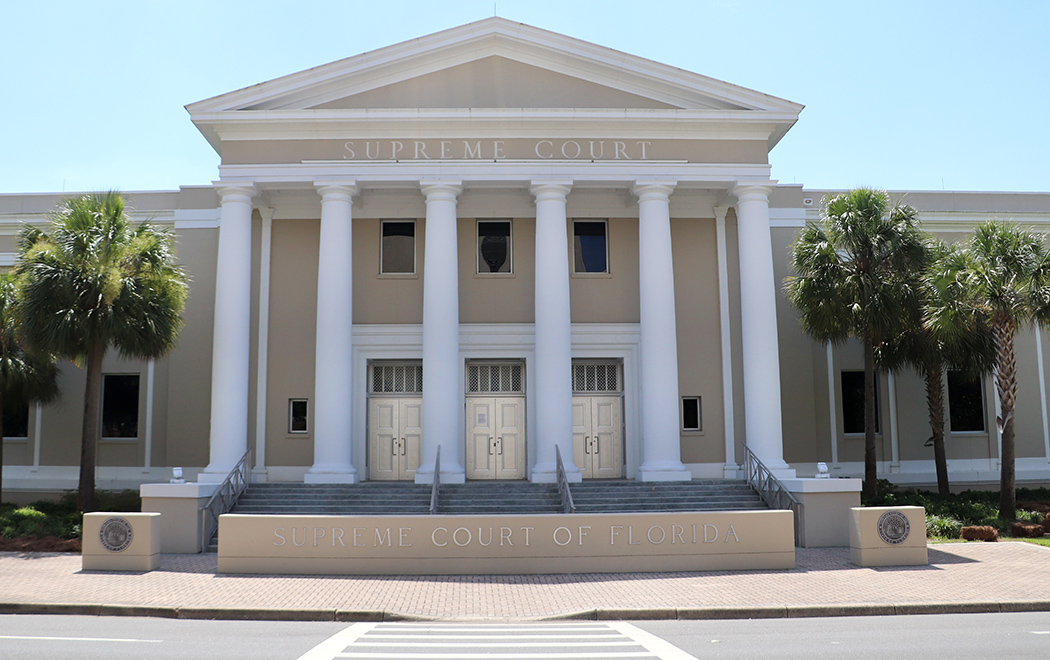

TALLAHASSEE, Fla. – The Florida Supreme Court heard oral arguments Wednesday to decide whether a proposed state constitutional amendment aimed at protecting abortion rights will be on the ballot this year.

The amendment asks Florida voters to “limit government interference with abortion” before a fetus is considered viable, which is at about 24 weeks of pregnancy. It reads in part, “No law shall prohibit, penalize, delay, or restrict abortion before viability or when necessary to protect the patient’s health, as determined by the patient’s healthcare provider.” 

The measure provides for an exception requiring that parents be notified before their minor children can get an abortion, which is already in the state constitution. 

Republican Attorney General Ashley Moody, who is seeking to block a vote on the amendment, has contended the wording of the amendment and its description of fetal viability would be “too ambiguous.”

Senior Deputy Solicitor General Nathan Forrester argued in court that the use of certain words, such as “prohibit,” would be misleading. 

The court also heard challenges during the hour-long hearing over whether the amendment meets Florida's requirement that a constitutional amendment deal with only one main issue. 

Forrester argued that the mention of “prohibit, delay, or restrict” signals multiple issues being raised by the amendment.

Courtney Brewer, the attorney for Floridians Protecting Freedom, which supports abortion rights, said Florida’s top court has ruled previously in favor of amendments that include multiple categories, as long as they are “two sides of the same coin.”

“It is clear that this amendment has a single purpose, which is to limit government interference with abortion,” Brewer said at a press conference afterward.

Chief Justice Carlos Muñiz questioned whether the amendment was a “wolf dressed in sheep’s clothes” and later added that it was a “wolf that comes as a wolf.” He also questioned whether it assumed that the Florida constitution’s definition of “natural rights” and “personhood” does not include the rights of the unborn.

Forrester said the amendment could confuse Florida voters. Muñiz disagreed..

“The people of Florida aren’t stupid, they can figure this out,” Muñiz said. “It’s pretty obvious that this is a pretty aggressive, comprehensive approach to dealing with this issue.”

Floridians Protecting Freedom collected more than 900,000 signatures to get the measure on the ballot.

The justices are expected to rule on the proposed amendment by April 1. If it is placed on the ballot, it would require the support of at least 60 percent of voters to pass. 

Five of the top court’s justices were appointed by Gov. Ron DeSantis, who signed into law a six-week abortion ban in 2023. The law has not gone into effect, as the previous 15-week ban is currently being challenged by a group of the same organizations forming Floridians Protecting Freedom.

A couple hundred protestors on both sides of the issue gathered outside the court in Tallahassee.

One side held signs that read “Stop political interference” and “Let us vote,” and chants of “My body, my choice.” Others carried signs that said, “enshrining abortion in the Florida Constitution is wrong.” They also prayed. 

Mathew Staver, who represented the groups Florida Voters Against Extremism and Liberty Counsel, which both oppose the amendment, said it was so broadly written that no law restricting abortion could be enacted.

“That includes parental consent, health and safety regulations with regards to clinics, how abortions can be done safely and where they can be done, or the kind of qualifications that are necessary for a doctor to have an abortion practice,” Staver said.

Lauren Brenzel, the campaign director for the abortion rights group, said, “We worked incredibly hard to develop language that is constitutional.” She added, “Quite frankly, we have people that no matter their stance on abortion, they don’t want politicians interfering in their lives.”

Florida is one of a number of states in which voters may have a direct say this year on abortion measures.

#     #     #

Email editor@

alachuatoday.com

Add a comment

BOWLING GREEN, Fla. — Today, Governor Ron DeSantis awarded nearly $223 million to expand broadband internet access to Floridians, including small and rural communities. This funding includes $135 million in state funding through the Broadband Opportunity Program and $86 million in federal funds through the Multipurpose Community Facilities Program. Awards through the Broadband Opportunity Program will support 54 projects in 33 Florida counties for broadband internet expansion that will provide internet to over 27,000 unserved residential, educational, agricultural, business and community locations. Awards through the Multipurpose Facility Program will support 29 community infrastructure projects including health clinics, schools and workforce development programs providing internet to Floridians across 18 counties. To learn more, click here
 
This funding comes as the Federal Communications Commission recently enacted new rules relating to private companies’ broadband expansion efforts, aimed at preventing “digital discrimination of access to broadband services based on income level, race, ethnicity, color, religion or national origin.” Through rules like this, the Biden administration is directly disincentivizing private companies from providing services like broadband internet to rural communities because they don’t meet certain diversity quotas. Florida will not enforce these discriminatory strings attached to federal funding that drive investment away from small and rural communities that are already underserved. 
 
"Connecting Florida’s small and rural communities to broadband internet will help them find jobs, access education resources and expand their businesses,” said Governor Ron DeSantis. "We will continue to make investments in broadband internet that support long-term growth for our communities, without federally imposed strings attached."
 
“Under Governor DeSantis' leadership, Florida's economy has grown at a persistent pace. Today's strategic awards help maintain Florida’s forward momentum," said FloridaCommerce Secretary J. Alex Kelly. "By connecting Floridians with centrally located community hubs, residents have increased access to find their next professional opportunity, upskill for future jobs and access telemedicine resources through a steady broadband internet connection."
 
“Thank you, Governor DeSantis, for your leadership and for investing in our community,” said Representative Kaylee Tuck. “The need for reliable broadband access has never been more prevalent, and the strain on rural communities like Hardee County has never been felt more than it is today. This investment will be incredible for our area.” 
 
Today’s awards build on Governor DeSantis’ earlier announcement of more than $226 million awarded for projects across 53 Florida counties, connecting more than 250,000 homes and businesses through the Broadband Opportunity Program. Additionally, Governor DeSantis awarded more than $247 million through the Broadband Infrastructure Program, connecting more than 59,000 unserved and underserved businesses, homes, farms and anchor institutions like hospitals and libraries to high-speed internet.
 
The federally funded Multipurpose Community Facilities Program supports the construction and rehabilitation of community facilities that provide important resources to Floridians to support workforce development, educational opportunities and access to healthcare in small and rural communities. Projects include community centers, health clinics, schools and workforce development programs serving Floridians across 18 counties.
 
Administered by FloridaCommerce, the Broadband Opportunity Program funds the installation and deployment of broadband internet infrastructure in unserved Florida communities, providing valuable access to telehealth, economic, educational and workforce development opportunities to offer a brighter future for all Floridians.
 
For a list of projects awarded through the Multipurpose Community Facilities Projects Program, CLICK HERE.
   
For a list of projects awarded through the Broadband Opportunity Program, CLICK HERE.
 
For more information on Florida’s broadband initiatives, visit the Office of Broadband's webpage.

#     #     #

Email editor@

alachuatoday.com

 
Add a comment

SELINSGROVE, PA (Jan. 15, 2024) –– BrightFarms has issued a voluntary recall of spinach grown by its supplier Element Farms in their Pompton Plains, New Jersey farm and distributed under the BrightFarms brand because the spinach has the potential to be contaminated with Listeria monocytogenes. Due to potential cross-contamination, BrightFarms is also issuing a voluntary recall of a limited quantity of four salad kit products (shown below) from its Selinsgrove, PA facility.

Listeria monocytogenes is an organism that can cause serious and sometimes fatal infections in young children, frail or elderly people, and others with weakened immune systems. Although healthy individuals may suffer only short-term symptoms such as high fever, severe headache, stiffness, nausea, abdominal pain and diarrhea, Listeria infection can cause miscarriage and stillbirths among pregnant women.

The recalled products were distributed to retailers in seven states including Connecticut, Massachusetts, New York, New Jersey, Pennsylvania, Virginia, and West Virginia.

The products come in 4-oz, clear, plastic containers. Information about the “best by” date, UPC, and facility code can be found at the bottom of the package. Pictures to assist customers in identifying the recalled products are found at the end of this announcement.

ProductOunceUPC
Codes
Facility
Code
Best-By Date
BrightFarms Baby Spinach 3.5oz 8-57062-00492-3 PEN8 1/11/2024,
1/13/2024,
1/18/2024,
1/20/2024
BrightFarms Mediterranean
Crunch Kit
6.35oz 8-50051-82501-1 PEN4 1/15/2024,
1/20/2024
BrightFarms Chickpea Caesar
Crunch Kit
6.50oz 8-57062-00415-2 PEN4 1/15/2024,
1/20/2024
BrightFarms Bacon Ranch
Crunch Kit
6.70oz 8-57062-00416-9 PEN4 1/15/2024
BrightFarms Southwest
Chipotle
5.85oz 8-50051-82500-4 PEN4 1/15/2024

No illnesses have been reported to date.

The recall of spinach was initiated after routine sampling conducted by Element Farms yielded a positive result for Listeria monocytogenes. Due to potential cross-contamination at BrightFarms’s Selinsgrove, Pennsylvania facility, BrightFarms is also recalling a limited quantity of four select salad kit products. No positive test results or reported illness have been received on those products, to date.

As a result of today’s recall, the company has temporarily suspended distribution of Element Farms grown spinach.

Retailers have been instructed to remove all recalled products from store shelves. Consumers who have purchased the affected products should not consume the products and discard them or present a photo of the product or receipt to their place of purchase for a full refund and then discard.

Consumers with questions are encouraged to call 1-866-857-8745 between 8:00am-6:00pm EDT or email info@brightfarms.com with the subject line: Recall.

#     #     #

Email editor@

alachuatoday.com

Add a comment