











Top Stories

Grid List

 GAINESVILLE, Fla. - City of Gainesville officials anticipate severe weather conditions, including temperatures below 45 degrees Fahrenheit, during the evening hours of Monday, Jan. 26-Saturday, Jan. 31. The anticipated temperatures will lead to the activation of the city's Cold Night Shelter (CNS) Program, and it is expected to remain in effect until overnight low temperatures rise above 45 F. The CNS program normally runs from Nov. 1 through March 31.

St. Francis House and GRACE Marketplace at the Empowerment Center will provide Cold Night Shelter services to people in need of shelter as long as overnight temperatures remain below 45 F. The CNS program providers serve additional persons in need of shelter so that families and individuals desiring shelter will have a warm place to stay. St. Francis House provides temporary shelter that is appropriate for families, women and children. GRACE Marketplace primarily serves individual adults.

 Please note, the dates have been extended through Saturday, Jan. 31.

#     #     #

email editor@

alachuatoday.com

Add a comment

NEWBERRY — Enrollment for the inaugural 2026 school year at Newberry Community School will open Feb. 1, school officials announced this week, marking a major milestone as the new elementary school prepares to welcome its first students.

Families with elementary students currently enrolled at Newberry Elementary School will be guaranteed a seat at Newberry Community School for the upcoming school year. However, parents must formally accept their child’s placement during the enrollment period to secure enrollment.

As preparations continue for the school’s first year, Principal Lacy Roberts said staffing efforts are already underway. Teaching positions are being filled by experienced educators and high-achieving education professionals focused on academic excellence, student growth and strong community values.

In addition to student enrollment, Newberry Community School is seeking volunteers and engaged parents to support its inaugural year. Opportunities are available for those interested in assisting in classrooms, helping with school events and participating in community-building initiatives.

Families interested in enrolling a child can visit the school’s website, ncsedu.org, beginning Feb. 1. Parents and community members who wish to volunteer are encouraged to contact Roberts or visit the Little Red Schoolhouse in Newberry for more information.

The Newberry Community School office is open Monday through Thursday from 8 a.m. to 4:30 p.m. Questions can be directed to the school office at 352-474-2040.

#     #     #

email editor@

alachuatoday.com

Add a comment

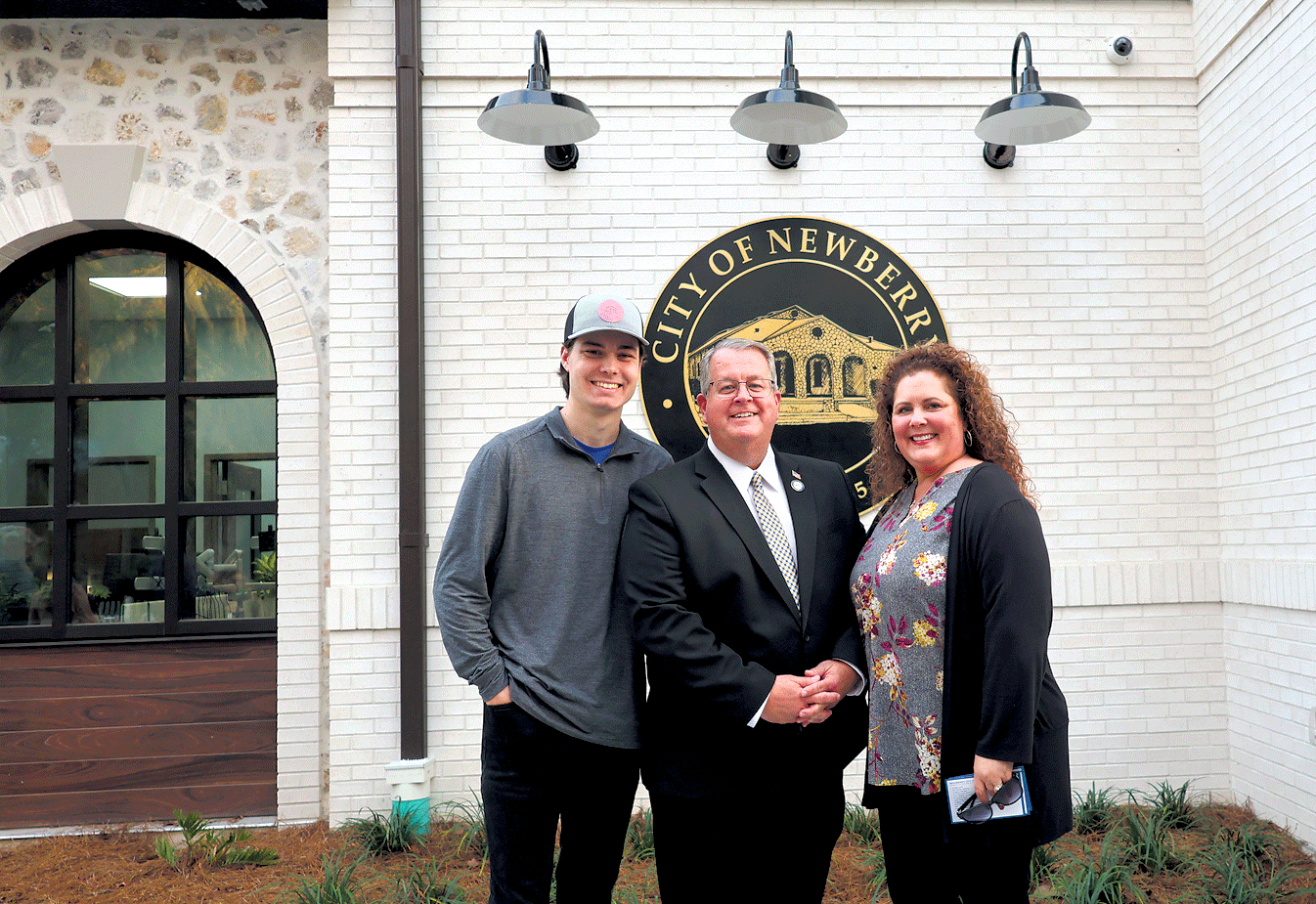
Newberry’s city officials held a ribbon-cutting ceremony Monday, Jan. 12, 2026, officially opening its new City Hall, a two-story downtown facility that consolidates municipal services under one roof./ Photo special to Alachua County Today

Local

NEWBERRY – Newberry officials marked a major milestone in the city’s growth Monday with a ribbon-cutting ceremony officially opening the city’s new City Hall, a long-anticipated project designed to centralize municipal services and better serve residents.

The ribbon cutting was held Monday, Jan. 12, 2026, formally ushering in the opening of the two-story, 11,000-square-foot facility in downtown Newberry. The event followed a public open house held during the city’s Fall Festival in November, which gave residents an early opportunity to tour the building ahead of its official debut.

Construction on the new City Hall began in September 2024 and has progressed steadily, culminating in a modern municipal facility that brings multiple city departments together under one roof for the first time in decades.

Previously, residents seeking city services often had to visit multiple locations. Community Development and the Building Department operated out of the historic Little Red Schoolhouse, while other departments were housed in Annex 2 or the former City Hall building. City officials have said the new facility was designed to streamline operations, improve accessibility and provide a more efficient experience for residents, developers and business owners.

The building’s first floor is dedicated to high-traffic, customer-facing departments, including Finance, Community Development, Customer Service and the Building Department. The second floor contains 18 offices and three collaborative work areas for city staff. An elevator serves both levels, though most public-facing services are intentionally located on the ground floor for ease of access.

A key feature of the building is the 1,246-square-foot City Commission Chamber, designed to accommodate larger audiences for public meetings. The chamber includes an accordion wall that allows the space to expand for large gatherings or contract for smaller meetings, along with updated technology to support presentations and public engagement. While the building does not include private offices for the mayor or commissioners, meeting rooms are available for private discussions when needed.

City planners emphasized that the building’s architectural design complements the surrounding downtown area while offering modern functionality. Officials have described the project as a long-term investment that supports Newberry’s continued growth and evolving service needs.

The project team included Scorpio Construction of Gainesville and Monarch Design Group, with city staff closely involved throughout the planning and construction process. With the new City Hall now open, the city plans to renovate the former 3,300-square-foot City Hall building. Once completed, the two structures will be connected by a covered loggia, creating a paved outdoor space intended for community events, farmers markets and festivals.

Future improvements are also planned for the adjacent Little Red Schoolhouse Museum, which is expected to undergo upgrades during a later phase of the project.

With the ribbon cut and doors officially open, Newberry residents can now access a centralized City Hall designed to serve the community for generations to come.

#     #     #

email editor@

alachuatoday.com

Add a comment

Visitors pose for photos with the Oscar Mayer Wienermobile during its stop at Alachua’s Market on Main on Saturday, Jan. 10, 2026. The iconic 27-foot-long vehicle drew crowds to the downtown farmers market as part of a two-day visit to the Gainesville area. / Photo special to Alachua County Today

Local

ALACHUA – One of America’s most recognizable novelty vehicles rolled into downtown Alachua on Saturday morning, drawing crowds, cameras and plenty of smiles as the Oscar Mayer Wienermobile made a stop at Market on Main.

The 27-foot-long hot dog on wheels appeared at the weekly farmers market on Saturday, Jan. 10, 2026, as part of a two-day visit to the Gainesville area. Shoppers and visitors gathered around the bright orange-and-yellow vehicle throughout the morning, posing for photos, chatting with the crew and picking up the iconic Wiener Whistles that have become a hallmark of Wienermobile appearances.

Parked along the edge of the bustling market, the Wienermobile added a national pop-culture attraction to the community event, which regularly features local farmers, artisans and food vendors. Families paused their shopping to take in the sight, while longtime fans of the brand shared stories and memories connected to the traveling vehicle.

Driven by Isaac — known by the nickname “At The Grill Isaac” — the Wienermobile’s appearance aligned with its mission of spreading cheer and engaging with communities during regional stops. “My name is At The Grill Isaac, and I’m the driver of the iconic Oscar Mayer Wienermobile,” the announcement stated ahead of the visit. “I’m thrilled to share that we’ll be rolling into the Gainesville’s area for some special events.”

The Alachua stop followed a Friday appearance in Gainesville, where the Wienermobile was displayed at the Cade Museum for Creativity & Invention. Together, the two stops brought the long-running Oscar Mayer promotion to North Central Florida, offering residents a rare opportunity to see the vehicle up close without leaving the area.

Market on Main, held weekly in downtown Alachua, proved to be a fitting backdrop for the visit, blending small-town atmosphere with a nationally recognized symbol of Americana. For many attendees, the unexpected arrival of the Wienermobile added an extra layer of fun and nostalgia to an already lively Saturday morning.

#     #     #

email editor@

alachuatoday.com

Add a comment

HIGH SPRINGS – Residents will have an opportunity to celebrate Florida’s Arbor Day later this month with a community tree planting event and free tree distribution hosted by the City of High Springs Tree Advisory Board in partnership with several local and county organizations.

The event is scheduled for Saturday, Jan. 24, 2026, from 10 a.m. to noon at the High Springs Civic Center, located at 19107 N.W. 240th Street. It is being organized in collaboration with the Alachua County Environmental Protection Department, High Springs Parks & R.E.C., and Santa Fe Tree Farm.

Participants may receive a complimentary tree, while supplies last, and will have the opportunity to hear brief presentations from guest speakers with expertise in environmental stewardship, tree care, and local conservation efforts. Light refreshments will also be provided.

“Trees add value to a community through shade, improved air quality, and reduction in runoff,” said Tree Advisory Board Chair Joanne Tremblay.

Although Florida’s Arbor Day is officially observed on the third Friday of January, organizers noted that Florida’s climate makes the cooler winter months the most favorable time for planting trees. Planting during this season allows root systems to establish before the heat of summer, improving long-term survival and growth.

City officials encourage residents to attend the event to learn more about the environmental and community benefits of trees, as well as proper planting and maintenance practices.

#     #     #

email editor@

alachuatoday.com

Add a comment

HIGH SPRINGS City of High Springs officials continue to work through questions surrounding a nearly $1 million invoice tied to a municipal sewer improvement project, as concerns grow about internal procedures, recordkeeping, and financial controls.

The issue first surfaced publicly in early December 2025, when Commissioner Tristan Grunder asked City Manager Jeremy Marshall what steps were being taken to prevent unexpected bills from surfacing in the future. Marshall responded that staff had begun reviewing thousands of emails and project records to ensure no additional invoices remained undiscovered.

“Before I can fix it, I have to make sure there’s nothing else out there,” Marshall said during the December meeting. The invoice at issue was dated Sept. 10, 2025, roughly three months before the commission and public became aware of it.

At that time, Marshall stated he believed the breakdown may have occurred in the purchase order process. Finance Director Diane Wilson, however, initially said the invoice was tied not to a procedural error but to confusion over the funding source. Wilson told commissioners a previous city manager advised staff the project was fully covered by grant funds, which later proved incorrect. Wilson noted the situation created a cash-flow shortfall rather than a purchasing error.

When the Commission reconvened Jan. 8, 2026, the explanation shifted. Marshall said the City’s Springbrook financial software may have closed out the purchase order prematurely. According to Marshall, when a purchase order includes multiple items listed on a single line, the system closes the PO when a partial payment is entered, incorrectly indicating that all project costs have been paid.

Multiple former City officials contacted by Alachua County Today disputed that interpretation, saying the software had long been sufficient for the City’s needs. City purchasing records reviewed by Alachua County Today show that several purchase order numbers were issued for project-related equipment and services.

Tensions rose during the January discussion, with Commissioner Tristan Grunder expressing strong dissatisfaction with how the matter has been handled.

“I’m concerned there are things out there we still do not know,” Grunder said. He stated the situation was “unacceptable,” questioning accountability and describing staff responses as “excuses.” He also highlighted the impact of the costs on City reserves and resident trust. A heated exchange followed between Grunder and Wilson.

Wilson responded by noting that the project was initiated before she joined the City and stated her department was “just paying the bills.” However, the job description for her office assigns responsibility for all accounting records, including grant and contract administration. High Springs has also experienced repeated delays in completing its annual audits, and Wilson acknowledged the invoice was missed because it was not included in the financial data reviewed in the most recent filings.

The sewer project traces back to a January 2023 vote in which the commission unanimously approved funding. Staff at that time advised that costs would be covered through a mix of grant dollars, American Rescue Plan Act funds, impact fees, and contingency money. A progress report filed with the Florida Department of Environmental Protection in April 2024 indicated the project was moving forward, but by mid-April all staff with direct knowledge of the undertaking had left City employment.

Emails obtained through public records requests show that outside project monitors continued to track progress. On May 23, 2024, project consultant Mittauer & Associates reported to the finance department that the project remained within budget and had a surplus of more than $64,000. The correspondence also indicated that impact fees and contingency funds may be needed if additional grants did not materialize, and that the City “should have previously expended $1,566,678” toward construction.

Marshall says additional invoices are still expected as the contractor works through punch-list items, and the final total remains unknown.

Questions also arose during the January meeting after Wilson said she had removed payroll functions from the Springbrook software because the City does not have the cloud-based version. Former officials contacted by Alachua County Today expressed surprise, saying the system had previously met the City’s needs.

In recent months, residents have seen higher utility rates, a fire assessment increase, and a millage rate adjustment — all prior to the discovery of the invoice. Since news of the bill became public, some residents have begun calling for a forensic audit, stating they have lost confidence in the City’s handling of financial matters.

The Commission is expected to continue discussion as staff reviews remaining project expenses and determines what steps may be needed to address internal processes.

#     #     #

email editor@

alachuatoday.com

Add a comment

The following is a press release provided by Florida TaxWatch. It has been published here as received, without additional reporting or editing by Alachua County Today staff. ~ 

Tallahassee, Fla. – Today, Florida TaxWatch released a second report, Save Our Taxpayers – Property Tax Relief Must be Accomplished Equitably, as a follow up to its original report Options to Eliminate or Reduce the Property Tax Burden on Florida Homeowners primer, as the 2026 Legislative Session commences. This report examines the Florida House of Representative’s proposals, provides the fiscal impact of each, and calls for a ‘Save Our Taxpayers’ ballot amendment for equitable property tax relief.

Property taxes are by far the largest source of tax revenue for Florida’s local governments, generating $59.2 billion in FY2025-26 for counties, school districts, municipalities, and special districts, and that amount is rising rapidly. Of this total, more than $20 billion is paid by Florida homeowners. This revenue funds critical government services such as public safety, fire protection, education, and sanitation.

Florida TaxWatch President and CEO Jeff Kottkamp said, “While the Governor and many in the Legislature want to bring a property tax relief proposal to the voters in 2026, they are far from a consensus of what that proposal will look like. Property tax levies, fueled by rising property values, are increasing rapidly in Florida. They have more than doubled in the last 10 years, including 50 percent growth in the last four years. In turn, many local government budgets have dramatically increased over the last 10 years.

“Providing property tax relief to Florida taxpayers is commendable and the focus on homestead property by the Governor and the Legislature is understandable. But putting a proposal on the 2026 ballot to eliminate all property taxes, without also addressing ever escalating local government spending, is not advisable.

“Florida TaxWatch provides six recommendations, with actionable items, calling for a ‘Save Our Taxpayers’ amendment to replace the current inadequate 10 percent non-homestead assessment cap with one that matches the Save Our Homes cap of the lesser of three percent or inflation for all property owners. We look forward to working with policymakers to ensure property tax relief is equitable for all of Florida’s hardworking taxpayers.”

Those who have been bearing the brunt of rising property taxes should not be forgotten. This includes renters, businesses, people renovating or building an addition to their home, people moving to Florida, and new homeowners. Almost all of the proposals before the Legislature would increase the tax shift from homestead to non-homestead property that already stands at more than $10 billion and growing.

The time is right for a “Save Our Taxpayers” cap to be created, limiting the increases in assessments for both homestead and non-homestead property at the same growth rate. This has been a long-standing Florida TaxWatch recommendation and its research helped to get the constitutional amendment on the ballot that created the 10 percent homestead cap in 2008.

Based on the findings in this report, Florida TaxWatch recommends:

  1. The Legislature should not attempt to put a constitutional amendment on the November 2026 ballot to eliminate all property taxes, even if it is limited to non-school property tax levies. Undertaking such a major change in Florida’s tax system should not be attempted without a comprehensive reform plan, including local government efficiency and fiscal responsibility, ensuring the provision of critical government services, and safeguards against the shifting taxes to non-homestead properties.
  1. A “Save Our Taxpayers” amendment should be put before the voters to replace the current inadequate 10 percent non-homestead assessment cap with one that matches the Save Our Homes cap of the lesser of three percent or inflation. This would help stop the current tax shift and ensure that all taxpayers are treated more fairly.
  1. The Legislature should create an additional exemption for new homeowners—for example, 25 percent of the new home’s initial assessed value. This could be structured so that the new homeowner would have an immediate 25 percent reduction in value which would then be phased out (dollar for dollar) as their Save Our Homes differential increases. This would reduce the cost of buying a home, especially in the first year, helping more Floridians achieve the goal of homeownership.
  1. If the Legislature wants to create a new homestead exemption, it should consider making the amount equal to a percentage of the median home value in the county where the home is located. Instead of a the same “one size fits all” amount for all homes statewide, tying the size of the exemption to each home’s value would make the tax savings relatively greater for those in the county with lower home values and therefore likely lower incomes. By acknowledging the difference in median home values between counties, it could help fiscally constrained counties deal with the revenue loss.
  1. Any new property tax benefit for homestead property only should be accompanied by a requirement that local governments adopt the rolled-back rate after adding back any taxable value lost to the new exemption, at least temporarily. This would ensure that tax burden is not shifted to other properties, but also that taxpayers receive the full value of the exemption the Legislature (and voters) expected.
  1. The Legislature should reform the Value Adjustment Board system, especially increasing the independence of VABs from the local officials that spend the money. A three percent success rate for taxpayers challenging their assessments (for people outside of Miami-Dade County) does not indicate a fair system.

Florida TaxWatch also examines the Florida House of Representatives’ seven proposed constitutional amendments and one statutory change, including the fiscal impact of each, which may be found on pages 5 through 8 here.

About Florida TaxWatch
As an independent, nonpartisan, nonprofit government watchdog and taxpayer research institute, and the trusted “eyes and ears” of Florida taxpayers for more than 45 years, Florida TaxWatch (FTW) works to improve the productivity and accountability of Florida government. Its research recommends productivity enhancements and explains the statewide impact of fiscal and economic policies and practices on taxpayers and businesses. FTW is supported by its membership via voluntary, tax-deductible donations and private grants. Donations provide a solid, lasting foundation that has enabled FTW to bring about a more effective, responsive government that is more accountable to, and productive for, the taxpayers it has served since 1979. For more information, please visit www.floridataxwatch.org.

#     #     #

email editor@

alachuatoday.com

Add a comment

The following is a press release provided by the office of Governor Ron DeSantis. It has been published here as received, without additional reporting or editing by Alachua County Today staff. ~ 

JACKSONVILLE, Fla.—Today, Governor Ron DeSantis joined First Lady Casey DeSantis and Mayo Clinic President and CEO Dr. Kent Thielen to announce that Mayo Clinic in Jacksonville is launching the first carbon ion therapy program in America and the only carbon ion therapy program in the Western Hemisphere.

“Our administration is committed to fighting cancer by making targeted investments in innovative therapies that have the potential to save lives," said Governor Ron DeSantis. "During my time as governor, we’ve increased funding for cancer research and treatment programs by more than 114 percent. The Casey DeSantis Cancer Research Program has strengthened Florida’s position as a national leader in cancer research and innovation. We’re proud that Mayo Clinic chose Florida as the home for this groundbreaking initiative, and we look forward to seeing how these cutting-edge therapies give hope to patients fighting some of the most aggressive and treatment-resistant cancers.”

In June 2025, Mayo Clinic opened the 228,000-square-foot Duan Family Building in Jacksonville to expand cancer treatment and research. The new facility will be uniquely designed to deliver both carbon ion therapy and proton therapy, including the ability to treat the same tumor with either approach for greater precision.

“Under the Governor’s leadership, Florida continues to lead in innovation, and today at Mayo Clinic Jacksonville, we are proving that this leadership extends beyond our state, transforming not only how we care for Floridians, but also how the rest of America approaches cancer treatment,” said First Lady Casey DeSantis. “This state-of-the-art technology was made possible, in part, through funding from the Casey DeSantis Cancer Research Program.”

Mayo Clinic expects proton therapy to begin in 2027 and carbon ion therapy to begin in 2028. Patients will benefit from expanded care well before then through additional services already being offered at the facility, including photon therapy, immunotherapy, CAR-T cell therapy, advanced imaging, and other specialized cancer services.

Carbon ion therapy is one of the most advanced radiation treatment technologies in the world, designed for hard-to-treat and treatment-resistant cancers. Until now, the therapy has only been available at a limited number of centers in Asia and Europe.

Florida continues to invest heavily in cancer research and treatment. Since 2019, Florida has invested more than $1 billion, increasing cancer program funding by more than 114% and committing nearly $218 million for cancer research in 2025 alone.

#     #     #

email editor@

alachuatoday.com

Add a comment

TALLAHASSEE – On Dec. 18, 2025, Governor Ron DeSantis announced a total of $311 million in awards to improve infrastructure in 37 Florida communities, which includes 32 awards to rural counties and small cities. These awards come from funding through both the Community Development Block Grant-Disaster Recovery (CDBG-DR) Infrastructure Repair Program, helping communities impacted by the 2023 and 2024 Storms—Hurricanes Idalia, Debby, Helene, Milton and the 2024 North Florida Tornadoes and funding from the Rural Infrastructure Fund (RIF). These awards invest in critical infrastructure needs ranging from utility and transportation improvements to emergency operations resources in these communities—especially supporting critical water infrastructure investments across the state.

“Today in Highlands County, I was proud to announce $311 million in grant awards to improve infrastructure in 37 communities across Florida impacted by the major storms of 2023 and 2024—Hurricanes Idalia, Debby, Helene, Milton and the North Florida Tornadoes,” said Governor Ron DeSantis. “These infrastructure projects will help make Florida more prosperous, more resilient, and better prepared to weather any storms that may come our way.”

“These awards directly support job creation by providing communities with the critical infrastructure to embolden their vision for resiliency and business formation,” said Florida Secretary of Commerce J. Alex Kelly. “Whether it’s upgrading utilities, developing pad ready manufacturing sites, or improving essential services, these projects help small and rural communities attract job creators, bolster their workforce and build a thriving economic future.”

The following communities will receive funds through the 2023 and 2024 Storms Community Development Block Grant-Disaster Recovery (CDBG-DR) Infrastructure Repair Program:

 
  • Bradford County Board of County Commissioners ($5,951,403) - to structurally reinforce the roadway by adding base, pavement and re-establish the roadside swales by regrading and adding erosion protection.
  • Citrus County Board of County Commissioners ($16,435,400) – to support the replacement of a sanitary sewer system following stormwater intrusion and increased flows caused by the 2023 and 2024 storms. Upgrading these systems will expand capacity and help alleviate long-standing constraints on the county’s ability to grow, supporting future business development.  
  • City of Arcadia 
    o   $14,233,044 – to widen the main stormwater channel in the city,         providing additional storage during storms.  
    o   $8,514,000 – to construct and expand the wastewater treatment plant. 
  • City of Live Oak ($3,895,500) – to construct a 100,000-gallon water storage tank and support a water line loop project.  
  • City of Macclenny ($7,028,700) – to harden and modernize the Ohio Street Water Treatment Plant by upgrading and improving software and equipment. 
  • City of Palatka ($4,932,396) - to harden and expand the capacity of the city’s wastewater treatment plant to handle future wet weather surges. 
  • City of Wauchula ($2,386,500) – to support wastewater system repairs, rehabilitation and floodwater mitigation.  
  • Columbia County Board of County Commissioners ($4,000,000) – to upgrade and harden community shelters in Columbia County.  
  • DeSoto County Board of County Commissioners ($8,000,000) – to construct and install wells and a pumping system to connect the wastewater treatment plant to the disposal wells—providing a more secure, underground disposal method for treated wastewater.  
  • Hardee County Board of County Commissioners ($1,900,000) – to remove vegetative debris from the Peace River Waterway system. 
  • Jacksonville Electric Authority ($20,000,000) – to redirect all wastewater flows to Jacksonville Electric Authority’s existing, reliable wastewater treatment facility.   
  • Okeechobee County Board of County Commissioners ($2,720,000) – to rehabilitate, preserve and harden five critical county-owned bridges.  
  • Peace River Watershed Project ($70,000,000) – to support the water infrastructure repair project in Polk County—ensuring restoration and resiliency that manages flood risk and water quality impairment through habitat restoration.  
  • Santa Fe College ($5,000,000) – to repair and upgrade the campus gymnasium due to significant roof damage from the 2023 and 2024 Storms.  
  • Sebring Airport Authority ($3,044,630) – to demolish and replace the existing stormwater system and associated infrastructure at Sebring Regional Airport and Multimodal Logistics Center. 
  • Suwannee County Board of County Commissioners ($38,044,115) – to construct the North Florida Regional Special Needs Emergency Shelter.   
  • Town of Glen St. Mary ($1,339,500) – to harden the wastewater collection system by installing permanent standby generators for the sanitary sewer lift stations.  
  • Town of St. Lucie Village ($12,124,812) – to construct a resilient, centralized potable water supply system for the town’s public use. 
  • Union County Board of County Commissioners ($1,401,750) – to construct a hardened public safety communications tower and upgrade the county’s current emergency dispatch system.  
  • Village of Indiantown  
    o   $9,300,000 – to construct a new Reverse Osmosis water treatment plant, replacing existing outdated systems.  
    o   $7,900,000 – to replace 13,000 linear feet of the main water transmission main for the Village. 

In addition to the $400 million in IRP funding, an allotment of $50 million has been allocated by HUD to eligible counties and municipalities located in 2023 and 2024 Storms' Most Impacted and Distressed (MID) areas affected by Hurricane Ian.

The following communities will receive funds under both Hurricane Ian and the 2023 and 2024 Storms Community Development Block Grant (CDBG-DR) Infrastructure Repair Program:
 
  • City of Avon Park ($22,248,529) – to assess, evaluate, repair, sleeve or rebuild the facilities at the City of Avon Park’s Sanitary Sewer Collection System.
  • Immokalee Water and Sewer District ($10,823,000) – to improve the existing wastewater treatment plant, addressing hydraulic imbalances, enhancing treatment reliability and providing surge capacity necessary to manage extreme wet-weather inflows.
  • Town of Dundee
    o   $6,008,781 – to harden the town’s sanitary sewer collection system and install monitoring equipment at the town’s wastewater treatment plant. 
      $10,257,429 – to repair damage and harden the town’s potable water system.
 
The RIF program supports infrastructure projects that drive job creation, capital investment, and strengthen economies in Rural Areas of Opportunity (RAO), rural counties and rural communities. For Fiscal Year (FY) 2025-2026, the Florida Legislature appropriated $17 million for the RIF statewide program and $5 million for the Panhandle-Specific program for a total of $22 million. FloridaCommerce received a record 112 applications requesting more than $195 million in funding during the 2025-2026 RIF application period. Since 2019, the program has awarded more than $110 million in grant funds.

The following communities will receive funds through the Rural Infrastructure Fund Program: 

  • City of Frostproof ($238,991) – to extend an existing water main, designing a 12-inch loop allowing for extension to the area proposed as the Duke Readiness Center. 
  • City of Lake City ($1,788,415) – to replace a hangar at the Lake City Gateway Airport significantly damaged by Hurricane Idalia.  
  • City of Okeechobee ($1,200,000) – to support a construction project aimed at improving public infrastructure, facilitating expansion within an existing industrial site, including the resurfacing of two major roads that provide access to the Okeechobee Commerce Center. 
  • City of Wauchula ($510,000) – to enhance the existing water distribution system by installing approximately 7,100 linear feet of water main, enhancing fire protection along Townsend Street to U.S. Highway 17. 
  • Columbia County Board of County Commissioners ($2,000,000) – to construct an inbound and outbound rail track serving the North Florida Mega Industrial Park.  
  • Hardee County ($250,000) – to build a dewatering facility, reducing long-term disposal costs. 
  • Hardee County Industrial Development Authority ($226,250) – to continue their centralized parking construction, including the relocation of electrical utilities underground. 
  • Keystone Heights Airport Authority ($2,950,450) – to construct a runway extension to Runway 2.   
  • Okeechobee Utility Authority ($1,000,000) – to install pipe and corresponding water mains to connect previously completed water infrastructure. 
  • Putnam County Board of County Commissioners ($3,000,000) – to construct and commission critical public infrastructure at the Central Landfill in Putnam County.  
  • Town of Zolfo Springs ($300,000) – to conduct a comprehensive Sanitary Sewer Evaluation Survey which will identify infiltration and inflow sources and address challenges from power outages, lift station failures and aging infrastructure.  

#     #     #

email editor@

alachuatoday.com


Add a comment

TALLAHASSEE – Florida students are invited to take part in the 2025 Native American Heritage Month art and essay contests, celebrating this year’s theme: “Celebrating Florida’s Native American Heritage,” according to an announcement Thursday from the Florida Department of Education and Volunteer Florida.

Native American Heritage Month is observed nationwide each November and serves as a time to acknowledge the cultural, historical and artistic contributions of Native Americans. This year’s contests are designed to encourage students across all grade levels to explore and share stories of Florida’s Native American leaders, artists and historical figures.

“We are proud to offer students opportunities to learn from and honor the Native Americans who have shaped Florida’s story,” said Commissioner of Education Anastasios Kamoutsas. “I encourage every student to learn about our Native American history and discover the remarkable achievements they made.”

Volunteer Florida CEO Josie Tamayo echoed the message, stating, “I am proud to celebrate the culture and heritage of Native Americans who enrich the value of our Nation. During Native American Heritage Month, we honor the many contributions of Native American Floridians.”

Art Contest Details

All Florida students are eligible to participate. Students in grades K–3 may enter the art contest by submitting one original, two-dimensional piece of artwork reflecting this year’s theme. Four statewide winners will be selected, with each receiving a $200 gift card for school supplies and a one-year pass to Florida State Parks.

Essay Contest Details

Students in grades 4–12 may enter the essay contest. Six winners will be chosen—two from each grade level group (4–5, 6–8, 9–12). Each winning essayist will receive a two-year Florida College Plan scholarship from the Florida Prepaid College Foundation and a $200 school-supply gift card. Essays must be written in English, no longer than 500 words, and focus on a Native American Floridian who has had a meaningful impact on the state’s history or culture.

Examples of suggested subjects include Betty Mae Tiger Jumper, the first woman elected Chair of the Seminole Tribe of Florida; Ulele, sometimes referred to as “Florida’s Timucuan Pocahontas”; Osceola, a prominent advocate for Seminole rights in the 1800s; and Noah Billie, a noted Seminole painter.

Excellence in Education Award

The Governor’s Native American Heritage Month Excellence in Education Award is open to all full-time educators in Florida’s elementary, middle and high schools. Four winners will be selected. Nominations may be submitted by teachers, principals, parents, guardians or students. Winners will receive $2,500 from Volunteer Florida.

How to Enter

Contest entry forms and educator nomination forms may be submitted online or mailed to:

Volunteer Florida

Native American Heritage Month Committee

1545 Raymond Diehl Road, Suite 250

Tallahassee, Florida 32308

All entries must be received by 5 p.m. Eastern Time on Friday, Nov. 21, 2025. Additional information is available at www.floridanativeamericanheritage.com.

#     #     #

Email cwalker@

alachuatoday.com

Add a comment

JACKSONVILLE, Fla. —Today, Governor Ron DeSantis and First Lady Casey DeSantis announced Florida awards $30 million in grant funding to four specialty children’s hospitals in Florida to develop and improve access to clinical trials, advance treatment protocols, and discover cures for childhood cancer. Johns Hopkins All Children’s Hospital in St. Petersburg, Nemour’s Children’s Hospital in Orlando, Nicklaus Children’s Hospital in Miami, and Wolfson Children’s Hospital in Jacksonville were each awarded $7.5 million.

“Since I became governor, Florida has invested more than $1 billion in cancer research and treatment—a 114% increase. We created the Cancer Connect Collaborative Research Incubator program within the Florida Department of Health this year to enhance cancer research throughout Florida,” said Governor Ron DeSantis. “Four of Florida’s top children’s hospitals have received a total of $30 million in funding for their innovative proposals to help children and adolescents who are fighting cancer. By investing in statewide infrastructure for pediatric cancer initiatives, we aim to eliminate the need for Florida families to travel out of state for potentially life-saving experimental therapies and specialized care.”

The Cancer Connect Collaborative Research Incubator was created in 2025 to further Florida efforts as a leader in cancer research and treatment. The Incubator is funded with $30 million and will focus on pediatric cancer in its first five-year funding cycle. While pediatric cancer accounts for just one percent of cases nationally, Florida’s pediatric cancer population is significant, with the state accounting for six percent of all new pediatric cancer cases in the U.S., thereby impacting thousands of children and families every year.

“Research Incubator investments to advance research, prevention, and treatment for pediatric cancer represents a meaningful step forward in our mission to improve outcomes, strengthen families, and ensure that every child has access to the most advanced care possible right here in Florida,” said First Lady Casey DeSantis. “I’m deeply grateful to Governor DeSantis for his unwavering leadership and commitment to advancing cancer research in Florida.”

“Thanks to the vision and leadership of First Lady Casey DeSantis, Florida continues to set the national standard for advancing adult and childhood cancer research and care,” said State Surgeon General Dr. Joseph A Ladapo. “Through the Cancer Connect Collaborative Research Incubator, we’re not only investing in science—we’re investing in hope for children and families across the state.”

The Incubator is part of Florida’s Cancer Connect Collaborative, an innovative model designed to accelerate research, share best practices, and turn data into actionable results. Guided by five pillars—Data, Best Practices, Innovation, Honesty, and Funding—the initiative brings together public and private partners to reshape cancer care delivery.

“Thanks to the leadership of First Lady and Governor DeSantis, Florida continues to make cancer research and treatment a top priority,” said Agency for Health Care Administration Secretary Shevaun Harris. “The Cancer Connect Collaborative Research Incubator is a bold step forward, beginning with pediatric cancer research. We look forward to seeing the strides made among the awardees and the collaboration that will accelerate breakthroughs, improve access to therapies, and offer hope to families across our state.”

#     #     #

email editor@

alachuatoday.com

Add a comment

~ 24 of 26 economic development awards will go to small and rural communities ~
TALLAHASSEE, Fla.—Today, FloridaCommerce announced the award of more than $1.5 million through the Community Planning Technical Assistance (CPTA) and Competitive Florida Partnership programs. The funding will support 26 Florida communities—including 24 small and rural communities—in developing and implementing plans to drive local economic growth.

“Under Governor DeSantis’ leadership, FloridaCommerce continues to support Floridians in building strong, resilient communities,” said Florida Secretary of Commerce J. Alex Kelly. “Since 2019, FloridaCommerce has awarded more than $7.6 million through the CPTA program to over 110 communities—empowering many of Florida’s small and rural communities to advance strategic economic initiatives and strengthen their local economies for future growth.”

The CPTA grant program seeks to strengthen communities through resilient, long-term economic development strategies and promotes innovative planning solutions to protect Florida's natural resources. Similarly, the Competitive Florida Partnership program supports communities in developing plans to attract new businesses and create workforce opportunities that promote partnerships, community design and a viable economy.

The following communities will receive funding through the CPTA grant program:

  • Bradford County ($75,000) – to create an Economic Development Strategy, outlining objectives, tactics, resources and marketing to promote county opportunities.
  • Opportunity Florida ($47,575) – to conduct an economic analysis study in the following rural counties: Calhoun, Franklin, Gadsden, Gulf, Holmes, Jackson, Liberty, Wakulla, North Walton and Washington.
  • Apalachee Regional Planning Council ($74,231.82) – to complete a multi-county Strategic Sites Inventory to prepare for industrial reshoring and business recruitment in Calhoun, Gadsden and Liberty Counties.
  • City of Crystal River ($75,000) – to develop a strategic and economic development plan for the city of Crystal River in Citrus County.
  • City of Keystone Heights ($60,000) – to review and update the comprehensive plan for the city of Keystone Heights in Clay County.
  • DeSoto County ($75,000) – to update the county plan to expand investment and tourism opportunities.
  • Central Florida Regional Planning Council ($75,000) – to create the Heartland Agricultural Land Use Conversion Study to enhance planning, coordination, and resilience in the following counties: DeSoto, Hardee, Highlands, Okeechobee and Polk.
  • Town of Cross City ($75,000) – to update land development regulations and zoning atlas for the town of Cross City in Dixie County.
  • Town of Horseshoe Beach ($75,000) – to implement Phase II of the Recovery and Resilience Plan, focusing on drainage, housing, and capital projects in Dixie County.
  • Gadsden County ($75,000) – to develop a Strategic Sites Inventory to identify and prepare sites for industrial and manufacturing growth.
  • Glades County ($55,000) – to update land development regulations and create fact sheets, checklists, and revised applications.
  • Hardee County ($60,000) – to create a Mass Casualty Incident and Reunification Plan to strengthen emergency medical response.
  • Town of Sneads ($45,000) – to support the development of a downtown revitalization and development plan for the Sneads "Old Downtown" area in Jackson County.
  • City of Clermont ($50,000) – to update the city plan to guide infrastructure, economic development and tourism strategies for the city of Clermont in Lake County.
  • City of Cedar Key ($75,000) – to advance shoreline and infrastructure protection strategies for the city of Cedar Key in Levy County.
  • Town of Greenville ($48,500) – to conduct a housing analysis and update economic and comprehensive plans for the town of Greenville in Madison County.
  • Village of Indiantown ($74,275) – to finalize the inaugural plan and add an economic development element for the village of Indiantown in Martin County.
  • City of Crestview ($50,000) – to develop a Strategic Economic and Development Plan to assess workforce, land-use assets, and branding, with clear goals and implementation steps for the city of Crestview in Okaloosa County.
  • Okeechobee County ($40,400) – to update the land development code.
  • Town of Loxahatchee Groves ($75,000) – to develop a comprehensive strategy for growth and resilience for the town of Loxahatchee in Palm Beach County.
  • Town of Kenneth City ($40,000) – to create an economic development strategy to strengthen commercial corridors and small businesses for the town of Kenneth City in Pinellas County.
  • City of Fort Meade ($45,000) – to update the Community Redevelopment Plan to assess progress and set future priorities for the city of Fort Meade in Polk County.
  • City of Palatka ($75,000) ­– to advance the Gateway Redevelopment Plan for the former Port Consolidated site, ensuring sustainable reuse for the city of Palatka in Putnam County.
  • Taylor County ($75,000) – to create an Economic Development Strategic Plan.
The following communities will receive funding through the Competitive Florida Partnership grant program:
  • Franklin County ($32,930) – to develop a comprehensive economic development strategy aimed to strengthen the local economy, reduce retail leakage and increase job creation in the commercial sector.
  • Hardee County ($32,930) – to develop a master plan for the county’s Government Center and Resiliency Hub, a facility that will provide support during emergencies, acting as a central point of contact for accessing services, building community, and preparing for and recovering from disruptions.

#     #     #

email editor@

alachuatoday.com

Add a comment

Managing glaucoma requires a commitment to a daily routine. Because glaucoma is often “silent” (meaning you won't feel your eye pressure rising), the medications are your primary defense against permanent vision loss.

William Garst HS
Here are five essential things every patient should know about glaucoma medications:

  1. Consistency is Your Most Powerful Tool

Glaucoma eye drops only work for a specific window of time (usually 12 to 24 hours). If you skip a dose, your eye pressure can spike, causing “silent” damage to the optic nerve.

  • The Goal: Maintain a steady level of medication in your eye around the clock.
  • Pro-Tip: Tie your drop schedule to a daily habit, like brushing your teeth or having your morning coffee, to ensure you never miss a dose.
  1. Proper Technique Prevents “Body-Wide” Side Effects

Many patients don't realize that eye drops can enter the bloodstream through the tear ducts, potentially affecting your heart or lungs. You can minimize this using a technique called Punctal Occlusion:

  • After putting in a drop, close your eyes gently (do not squeeze or blink rapidly).
  • Use your finger to press firmly on the inner corner of your eye (near the bridge of your nose) for 1 to 2 minutes.
  • This keeps the medicine in your eye and prevents it from draining into your throat and bloodstream.
  1. The “Five-Minute Rule” for Multiple Drops

If your doctor prescribes more than one type of eye drop, wait at least 5 minutes between them.

  • Why? Your eye can only hold about one-sixth of a single drop at a time. If you put the second drop in too quickly, it will simply wash out the first one before it has a chance to be absorbed, making your treatment less effective.
  1. Side Effects Are Common — and Manageable

Don't be alarmed if your eyes sting, turn red, or feel “gritty” when you first start a new medication.

  • Expect Local Changes: Some drops (Prostaglandins) can cause your eyelashes to grow longer or even permanently darken the color of your iris (the colored part of your eye).
  • Monitor Systemic Effects: Beta-blocker drops can sometimes slow your heart rate or worsen asthma. Always tell your eye doctor about your full medical history, especially heart or lung conditions.
  • Refrigeration Trick: If you have trouble feeling if the drop actually landed in your eye, try keeping the bottle in the fridge. The cold sensation makes it much easier to tell if you’ve “hit the target.”
  1. They Don't Make Your Vision Better (But They Keep It)

One of the hardest parts of glaucoma treatment is that the medication doesn't improve your sight or make your eyes feel better — it simply preserves the vision you still have.

  • Stay the Course: You may feel like the drops aren't “doing anything” because you don't see a difference, but they are working behind the scenes to prevent blindness.
  • Never Stop Suddenly: Abruptly stopping glaucoma medication can cause a dangerous “rebound” spike in eye pressure.

Prosper and be in health

*     *     *

William Garst is a consultant pharmacist who lives in Alachua, Florida. He is semi-retired and works part time at Lake Butler Hospital in Lake Butler, Florida. William received his pharmacy degree at Auburn University and a Doctor of Pharmacy from Colorado University. The Pharmacy Newsletter is a blog where you can find other informative columns. He may be contacted at garstcph@gmail.com.

#     #     #

Email editor@

alachuatoday.com

Add a comment

William Garst HSEveryone taking prescription medications should be aware of essential safety practices. Here are six tips to help ensure you are taking your medicine correctly and safely:

1. Maintain a Comprehensive Medication List

Keep an up-to-date list of everything you take, and share it with every healthcare provider you see (doctors, specialists, dentists, and pharmacists).

  • Include: All prescription drugs, over-the-counter (OTC) medications, vitamins, herbs, and dietary supplements.
  • Detail: The name, dosage, how often you take it, and the reason it was prescribed.
  • Why it matters: This is the most crucial step to prevent dangerous drug-to-drug interactions, to ensure you don't accidentally overdose on two products with the same active ingredient, and to help your doctor avoid prescribing medicine you shouldn't take.

2. Know the "Five W's" of Each New Drug

Before you leave the doctor's office or the pharmacy, make sure you know the following for every new prescription:

  • What is the name of the drug and what is it for?
  • When should I take it (e.g., morning, night, with food, on an empty stomach)?
  • What are the most common side effects, and when should I call the doctor?
  • What foods, drinks (like alcohol or grapefruit juice), or other medications should I avoid?
  • Why am I taking this (What is the goal of the therapy)?

3. Take Your Medication Exactly as Prescribed

Consistency is key to the drug's effectiveness and your safety.

  • Follow Directions: Take the exact dose at the exact time(s) specified. Do not skip doses, and never take a larger dose because you think it will work faster.
  • Do Not Stop Early: Finish the full course of a prescription (especially antibiotics), even if you start to feel better. Never stop taking a maintenance drug on your own; always consult your doctor first.
  • Ask Before Modifying: Do not crush, cut, or chew tablets unless your pharmacist or doctor specifically says it is safe, as this can affect how the drug is absorbed or release the medicine too quickly.

4. Use a Single Pharmacy

Whenever possible, fill all your prescriptions at the same pharmacy.

  • Interaction Check: This allows your pharmacist—who is a medication expert—to have a complete and centralized record of your profile and automatically check for potential drug interactions or dosage conflicts.
  • Ask Questions: Your pharmacist is your best resource for practical advice on when and how to take a medication and what common side effects to expect.

5. Store and Dispose of Medication Safely

Improper storage can ruin the drug's effectiveness, and improper disposal can lead to danger.

  • Storage: Keep most medications in a cool, dry place, away from heat and direct sunlight. The bathroom medicine cabinet is often too humid for proper storage.
  • Security: Always store medications, especially controlled substances and pain relievers, in a secure place out of reach and out of sight of children, pets, and visitors.
  • Disposal: Never flush medicine down the toilet or throw it in the trash unless the label specifically instructs you to. Find a drug take-back program or a community disposal site (often at local police departments or pharmacies) for safe disposal of unused or expired drugs.

6. Never Share or Borrow Prescription Medication

Medications are prescribed based on an individual's specific medical condition, weight, allergies, and other concurrent medications.

  • For You Only: Never take medicine prescribed to another person, even if you have the same symptoms. What is helpful for one person could be dangerous or deadly for another.
  • Do Not Share: Never give your prescription to a family member or friend. If you have unused medication, dispose of it safely.

Prosper and be in health.

*     *     *

William Garst is a consultant pharmacist who lives in Alachua, Florida. He is semi-retired and works part time at Lake Butler Hospital in Lake Butler, Florida. William received his pharmacy degree at Auburn University and a Doctor of Pharmacy from Colorado University. The Pharmacy Newsletter is a blog where you can find other informative columns. He may be contacted at garstcph@gmail.com.

#     #     #

Email editor@

alachuatoday.com

Add a comment

Sept 15 – Oct. 15 is the nationwide celebration of Hispanic Heritage Month. This year’s theme is “Collective Heritage: Honoring the Past, Inspiring the Future,” reminding us that our nation’s strength comes from the diverse people who call it home and the shared commitment to build a better future together.

From the arts and education to business and public service, Hispanic Floridians continue to enrich every aspect of life in our state. Their leadership, creativity, and dedication exemplify the power of community and the enduring belief that opportunity should be within reach for all.

The Florida Commission on Human Relations’ (FCHR) mission is to promote equal opportunity and prevent discrimination by investigating allegations of discrimination in housing, public accommodations, employment, and state whistleblower retaliation as well as educating Floridians about their rights and opportunities. Through our diligent work, we continue to build a Florida where everyone is treated with dignity and respect. For more information or to file a complaint, contact the Florida Commission on Human Relations at (850) 488-7082 or visit www.FCHR.MyFlorida.com.

This month, and throughout the year, we honor the past while inspiring the future, by recognizing the collective heritage that connects us, celebrating the diversity that strengthens us, and reaffirming our commitment to fairness for every Floridian.

Cheyanne Costilla, Executive Director

Florida Commission on Human Relations

Add a comment

The history of vitamin K is a story of a single discovery that later expanded to include a family of related compounds, each with distinct roles in the body. The journey from initial observation to a detailed understanding of vitamin K1 and William Garst HSK2 spans several decades and involves multiple scientists.

The Initial Discovery of Vitamin K

The story begins in the late 1920s with Danish biochemist Henrik Dam.

  • 1929: Dam was conducting experiments on chickens, feeding them a diet that was deficient in cholesterol and fat. After a few weeks, he noticed that the chickens developed a mysterious bleeding disorder, where their blood was slow to clot.
  • 1935: Dam concluded that a new, fat-soluble vitamin was missing from the chickens' diet. He named this substance “Koagulations-Vitamin,” which is German and Danish for “coagulation vitamin.” This is where the letter “K” comes from.
  • 1939: American biochemist Edward Doisy and his team at St. Louis University isolated and determined the chemical structure of the primary plant-based form of the vitamin, which they named phylloquinone. This substance would later be officially named Vitamin K1.

For their work on the discovery and chemical nature of vitamin K, Dam and Doisy were jointly awarded the Nobel Prize in Physiology or Medicine in 1943.

Vitamin K1 (Phylloquinone)

  • Source: From the very beginning, it was clear that the "anti-hemorrhagic" factor came from plant sources, particularly green, leafy vegetables like spinach and kale.
  • Function: Early research, and the Nobel Prize, focused on its essential role in blood coagulation. Vitamin K1 acts as a crucial cofactor for an enzyme that "activates" several clotting factors in the liver, including prothrombin (Factor II), Factor VII, Factor IX, and Factor X. Without this activation, these proteins cannot function properly, leading to uncontrolled bleeding.
  • Modern Understanding: Vitamin K1's role in blood clotting remains its most well-known and clinically important function. It is used medically to treat bleeding disorders, and is routinely given to newborns to prevent a condition called Vitamin K Deficiency Bleeding (VKDB).

Vitamin K2 (Menaquinones)

The story of vitamin K2 is more recent and has led to a re-evaluation of the entire vitamin K family.

  • Discovery of a Second Form: Soon after the discovery of vitamin K1, scientists realized that there was another form of vitamin K. This second form, found in animal products and produced by bacteria, was chemically different. It was named menaquinone and collectively referred to as Vitamin K2. Unlike K1, which has a single chemical structure, K2 is a family of related compounds, designated as MK-4, MK-7, MK-9, etc., based on the length of their side chain.
  • Japanese Fermented Foods: A major breakthrough in the understanding of K2 came from research into the traditional Japanese food natto, a dish of fermented soybeans. Scientists discovered that natto was an incredibly rich source of a long-chain menaquinone, specifically MK-7. This led to a boom in research on K2's health benefits.
  • Beyond Blood Clotting: While K1 is primarily used by the liver for blood coagulation, researchers found that K2 has a different fate in the body. It is preferentially used by other tissues, especially bone and arterial tissues.
  • The “Calcium Paradox”: A key aspect of modern K2 research is its role in “calcium trafficking.” Scientists have discovered that K2 activates proteins like osteocalcin in bones, which helps bind calcium and integrate it into the bone matrix. At the same time, K2 activates Matrix Gla Protein (MGP), a protein that prevents calcium from building up in soft tissues like arteries. This led to the theory that K2 may play a significant role in both bone health (preventing osteoporosis) and cardiovascular health (preventing arterial calcification).

Summary of Key Differences and Modern Research

Feature

Vitamin K1 (Phylloquinone)

Vitamin K2 (Menaquinones)

Primary Source

Green leafy vegetables

Fermented foods (natto, cheese), animal products (egg yolks, some meats), and gut bacteria

Primary Function

Blood coagulation (clotting)

Bone health, cardiovascular health (preventing arterial calcification)

Historical Focus

The first form of the vitamin discovered; initial research focused entirely on this form for its anti-hemorrhagic effects.

A later discovery, with its distinct functions only becoming widely known and studied in the last few decades.

Chemical Structure

A single compound (phylloquinone)

A family of compounds (menaquinones), denoted as MK-4, MK-7, etc.

The history of vitamin K is a testament to how scientific understanding evolves. What began as a single discovery of a “coagulation vitamin” has expanded to encompass a complex family of nutrients with far-reaching effects on human health.

Prosper and be in health.

*     *     *

William Garst is a consultant pharmacist who lives in Alachua, Florida. He is semi-retired and works part time at Lake Butler Hospital in Lake Butler, Florida. William received his pharmacy degree at Auburn University and a Doctor of Pharmacy from Colorado University. The Pharmacy Newsletter is a blog where you can find other informative columns. He may be contacted at garstcph@gmail.com.

#     #     #

Email editor@

alachuatoday.com

Add a comment

~ The First Recorded Clinical Trial in 1747 ~

The history of Vitamin C is closely linked to the understanding and eventual conquest of scurvy, a debilitating and often fatal disease that William Garst HSplagued sailors on long voyages for centuries.

Early Observations

As early as the 15th century, it was noted that certain foods, particularly citrus fruits, had a curative effect on scurvy. Vasco da Gama's voyages, for instance, observed this link.

In 1747, James Lind, a British naval surgeon, conducted a controlled experiment demonstrating that citrus fruits effectively prevented scurvy. He compared various treatments among sailors with scurvy and found that only those receiving oranges and lemons recovered. This is perhaps, the first recorded clinical trial.

Despite Lind's groundbreaking work, it took several decades for the British Navy to mandate citrus fruit or juice as a regular provision for sailors, earning them the nickname “limeys.”

The Dawn of Vitamin Research:

In 1912, Casimir Funk introduced the concept of “vitamins” as essential dietary components. The anti-scorbutic factor was soon recognized as a water-soluble substance, initially called “water-soluble C.”

Isolation and Identification:

In 1928, Hungarian scientist Albert Szent-Györgyi isolated a substance from animal adrenal glands, naming it “hexuronic acid.” He suspected it might be the anti-scorbutic factor.

Around the same time, in 1932, American biochemist Charles Glen King also isolated vitamin C in his laboratory and concluded it was the same as Szent-Györgyi's hexuronic acid. There was some dispute over who made the definitive connection first, possibly due to communication delays.

Working independently, Szent-Györgyi and his colleague Joseph Svirbely conducted experiments on guinea pigs (which, like humans, cannot synthesize vitamin C) and proved that hexuronic acid was indeed the anti-scorbutic factor. They renamed it “ascorbic acid,” meaning “anti-scurvy.”

Structural Determination and Synthesis:

In 1933, British chemist Norman Haworth determined the chemical structure of vitamin C. Haworth and Szent-Györgyi jointly proposed the name “ascorbic acid”

Both Szent-Györgyi and Haworth were awarded Nobel Prizes in 1937 for their work on vitamin C. Szent-Györgyi received the Nobel Prize in Physiology or Medicine for his discoveries concerning biological combustion, with specific reference to vitamin C, and Haworth received the Nobel Prize in Chemistry for his work on the constitution of carbohydrates and vitamin C.

Further Discoveries and Applications:

Szent-Györgyi continued his research, famously identifying paprika as an exceptionally rich and easily accessible source of vitamin C, allowing for its production in larger quantities.

Since its discovery, vitamin C has been extensively studied for its various roles in human health, including its function as an antioxidant, its involvement in collagen synthesis, immune function, and iron absorption.

Today, vitamin C is recognized as an essential nutrient, and its deficiency is known to cause scurvy, characterized by symptoms like weakness, bleeding gums, and poor wound healing.

Research continues to explore the potential benefits of vitamin C in preventing and treating various diseases.

The history of vitamin C is a compelling story of scientific investigation driven by the need to combat a devastating disease. From empirical observations to isolation, structural determination, and synthesis, the journey to understanding and utilizing this essential nutrient has significantly impacted human health

*     *     *

William Garst is a consultant pharmacist who lives in Alachua, Florida. He is semi-retired and works part time at Lake Butler Hospital in Lake Butler, Florida. William received his pharmacy degree at Auburn University and a Doctor of Pharmacy from Colorado University. The Pharmacy Newsletter is a blog where you can find other informative columns. He may be contacted at garstcph@gmail.com.

#     #     #

Email editor@

alachuatoday.com

Add a comment

As a concerned citizen of Florida, I am writing to express my deep alarm over the recent decision to eliminate all vaccine mandates in our state. Vaccines have long been one of the most effective and life-saving public health tools we have. Rolling back these protections threatens to reverse decades of progress against diseases like measles, mumps, and polio — illnesses that vaccines had nearly eliminated.

This decision will not affect all Floridians equally. Black and Brown communities, already facing disproportionate rates of chronic illness, limited access to care, and systemic health inequities, will bear the heaviest burden. Without the safeguard of mandates, these communities are at greater risk of disease outbreaks and preventable deaths.

I am also concerned about the issue of trust. Our nation’s history of medical neglect and mistreatment of Black and Brown populations has left a deep scar of mistrust in the healthcare system. Abrupt policy changes such as this risk eroding fragile progress in building confidence and could reinforce skepticism toward public health guidance.

Beyond the health risks, there are serious financial and economic consequences. Preventable outbreaks lead to increased healthcare costs, hospitalizations, and strain on already overburdened medical systems. Families who cannot afford time off work or unexpected medical bills will be disproportionately harmed. Local businesses and schools may also face disruptions if vaccine-preventable diseases reemerge, causing lost productivity and economic instability. In short, what may appear to be a rollback of regulation could instead create higher costs for families, communities, and the state as a whole.

While individuals should have the right to make informed decisions — including the ability to opt out under certain circumstances — public health policy must balance personal choice with the protection of children, immunocompromised individuals, and entire communities. Without mandates or robust equity-driven alternatives, our most vulnerable neighbors will be left unprotected.

Faith and cultural values are also central to many families’ health decisions. Public health efforts should engage and respect these perspectives. But removing mandates outright, without strong outreach, education, and access initiatives, will send us backward — leaving communities exposed to diseases that science has already taught us how to prevent.

I urge you to reconsider this decision. If mandates are to be removed, Florida must implement strong, equity-focused measures to ensure that every Floridian — regardless of race, income, or faith — is protected. Public health policy must be guided not only by science and fairness but also by a recognition of the enormous economic and financial strain that preventable outbreaks place on families and our state.

Roberta C. Lopez

Archer, Florida

Add a comment

FloridaPublicNoticesSite

FlaPublicNotices

Search Florida Public Notices


National News

Dear Most Holy Father:

    Thank you for attempting to humanize the office of pope.

    The majority of Catholics have blindly viewed pontiffs as God-like and incapable of making mistakes because of being infallible.

    Your actions, so far, do give me hope. I pray you will lead us toward renewal (retaining the good stuff), reformation (discarding the bad stuff), and rebirth (uncompromising justice and renewed spirituality).

    I first contacted John Paul II in 1993, and again in 2002. I contacted Benedict XVI several times during his papacy.

    I challenged them to reform an indifferently corrupt and a conspiracy-driven theocracy for the innumerable crimes the hierarchy had committed for centuries.

    Mandated priest celibacy, the murder of Joan of Arc, persecution of Martin Luther, imprisonment of Galileo, unjust inquisitions and crusades and the coddling of clergy sexual predators are examples of the church’s abuse of power.  

   The current crisis is attributable to the disreputable leadership of John Paul and Benedict for not putting the needs of victims first over predator priests.

    John Paul and Benedict shamefully elected to shelter sodomizers and the institution of Catholicism itself above all else.

    I urge you to stand on your perch at Saint Peter’s this Ash Wednesday and declare:

    We, the popes, cardinals, bishops and priests of the Roman Catholic Church have been grievously and sinfully wrong since the very beginning of the church’s history in protecting predator priests at the expense of the victims of clergy sexual abuse. Humbly, we openly admit our culpability, and, in professing our shame, ask for forgiveness from God and all humanity for the unspeakable crimes we have committed against victimized children and their families for nearly 2,000 years.”

    One critical action you need to take is to stop the canonization process for John Paul which will be the ultimate “Conspiracy of Catholicism.”

    There are a number of reasons this unworthy pontiff should not be canonized.

    John Paul had numerous opportunities to thwart the church’s sexual abuse scandal. He did virtually nothing to rid the church of sexual predators.

    In 1985, there was a major crisis in Lafayette, La. A priest was sentenced to 20 years in prison for molesting dozens of children.

    This scandal provided John Paul an excellent platform to become a hero for Catholicism by laicizing predator priests and by setting a “zero tolerance” standard for known sexual predators.

    He failed to do so. Instead, he became a co-conspirator with bishops everywhere by harboring clergy sexual abusers who were moved from parish to parish to sodomize other children. Is this action worthy of sainthood?  

    In the early 1990s, John Paul was given another opportunity to take action. Clergy sexual abuse allegations were surfacing all across America, especially in Massachusetts.

    John Paul chose to ignore the severity of an ever-increasing scandal by not calling Cardinal Law to task for sheltering known clergy sexual predators in the Boston archdiocese. Is this action worthy of sainthood?

    In 1995, Law’s Secretary for Ministerial Personnel was commissioned a bishop by John Paul.

    This egregious action was effectuated despite the pope knowing this monsignor was aware of a number of priests in his archdiocese being sexual predators. In 1998, this bishop was promoted to head his own diocese.

    He was probably rewarded for being the proverbial “corporate man” in shielding Law and the Vatican from being fingered as co-conspirators in the rape of innocent children. Is this action worthy of sainthood?

    Thousands of allegations were made around the world in 2002 against priests and bishops alleging sexual misconduct.

    This crisis was again prevalent in the Archdiocese of Boston. Law was unscrupulously transferred to the Vatican instead of keeping him in Boston to face the music.

    This convenient relocation allowed Law to escape possible legal action in America since he maintained dual citizenship status in America and in Vatican City.

    Rewarding Law for failing to protect children from harm was the ultimate “Conspiracy of Catholicism” committed by John Paul during his inglorious tenure. Is this action worthy of sainthood?

    Allowing Law to run and hide in the Vatican is the clincher in insisting the canonization process for John Paul cease immediately.

    A number of saints of the church had checkered pasts prior to becoming truly repentant for their sins and crimes.

    Saints Paul and Augustine are wonderful examples of sinners who displayed outward signs of repentance prior to being canonized.

    To the contrary, John Paul went to his grave never publicly displaying sorrow for his grievous sin of indifference in allowing children to be raped by clerics and by not laicizing known sexual predators.

    Does John Paul’s lack of contrition make him worthy of sainthood? 

    I implore you to let God be the supreme impartial judge in determining John Paul’s worthiness of being declared a saint.

    The church must not perpetuate “The Conspiracy of Catholicism” by canonizing a dubious leader of the world’s Catholics, one who never asked for forgiveness for the heinous crimes he committed against humanity.

     I still love my church and its sacred traditions, participate in the sacraments, contribute financially to my parish and other Catholic charities, and proudly “cross” myself in public whenever prayers are said at meetings and other events.

     On the other hand, I have very little respect for the church’s hierarchy, notwithstanding my belief in many of the church’s doctrines and beautiful traditions.

     Hopefully, you can improve my less than flattering opinion of the Vatican and the bishops of the church.

     Taking a bold step into the future by leading a spiritual rebirth of a broken “Christian” church thereby erasing “The Conspiracy of Catholicism” once and for all may just do it.

     I pray that you will have the courage to take this step.

#     #     #

Email editor@

alachuatoday.com

Add a comment

Keeping frail elderly loved ones at home can be extremely difficult; not only in terms of ensuring they receive the proper medical and personal care they need – which can often be a weekly or even daily necessity – but it can also prove difficult in terms of managing and maintaining a healthy balance with a career and personal life.

Many of us have struggled with this challenge, yet know it is a  more acceptable alternative than placing our mother, father or other loved one in a nursing home.  However, there is now an alternative that, if introduced, will provide much-needed assistance to families that are caring for a loved one by providing comprehensive in-home care to frail seniors at risk for nursing home placement.  This alternative is called a PACE program, or Program of All-inclusive Care for the Elderly.

PACE programs are innovative managed care programs focused on providing all health care and other supportive services to keep those 55 years or older, who are very frail and at risk for long-term nursing home placement, living as independently as possible, for as long as possible.

During the 2013 Legislative Session, Haven Hospice is hopeful that the Florida Legislature will support the implementation of PACE programs in Duval, Alachua and Clay counties.  Many wonder why a hospice provider would operate a PACE program as they are two very different services.  The reason is simple, hospices are often best equipped from an operational standpoint to run PACE programs; and, at Haven, we truly believe that this valuable and unique managed care program will have a positive impact on the welfare of Florida seniors and their families, as well as providing significant saving to the state Medicaid budget.

If introduced, this valuable program would provide the entire continuum of care and services to seniors, including adult day care that offers primary care (dental and eye care; podiatry care; physical, speech, occupational and recreational therapies; nutritional counseling and meals; social work services; nursing and personal care); primary medical care provided by a PACE physician, who is familiar with the history, needs and preferences of each PACE participant; home health care and personal care to maintain the senior’s independence in their homes; all necessary prescription drugs; respite care and hospital and nursing home care when necessary.

In PACE programs, care and services are centered around an Adult Day Health Care Facility, which will strive to retain the focus on care and socialization by aiming to limit participants’ time in transport to or from the PACE facility.   Moreover, under this unique program, health care providers and professionals are allowed the freedom and flexibility to plan and provide the most appropriate services, allowing each participant’s care to be specifically tailored to suit their needs and circumstances.

We are hopeful that members of the Florida Legislature will consider supporting the unique and valuable PACE concept this session, that will have a significant and positive impact on frail seniors and their loved ones.

Tim Bowen is President of  Haven Hospice.

Add a comment

Columns2012Mike Griffis, Vice-Chairman, Citizens for Strong Schools

For Alachua County Public Schools, we have an opportunity Tuesday to renew a one mill ad valorem tax to pay for school nurses, classroom technology, and music, art, library, guidance, band, chorus, and academic magnet programs.

Vote Yes…

And don’t fall victim to four common misconceptions.  Let me debunk them here.

  1. School taxes have increased: False.

School funding comes mainly from two sources: sales tax dollars and local property taxes.  The state legislature controls nearly all of this.  Every year, it sends fewer sales tax dollars and caps the millage rate that our school district can levy (one mill is $1 tax per $1,000 property value).

In 1995, it was 12.2 mill.  Today, it is down to 8.5, counting the 1 mill.  Actual yearly ad valorem tax on a typical house has been flat, no difference or even less when compared to 1995.  A house that has significantly appreciated since then might pay nominally $125 more (see http://yesforalachuaschools.org).

While your taxes have increased, our public schools are not getting them.

In pre-Lottery 1988, the legislature funded education with 60 percent of the overall state budget.  Now, to pay for pet projects, the legislature has reduced education to 29 percent of the budget.

Emphasis in the term-limited legislature is not on public education.  But state law does allow for voter-approved additional millage to pay for programs ignored by the legislature; hence, the ballot initiative.

  1. Administration is bloated, funding isn’t getting into classrooms: False.

In the budget for our school district, 77 percent goes to personnel, which are mostly teachers.

Only one-half a percent goes to general administration and pays folks working out of a building built in 1900.  School administration, mostly principals and vice-principals of 42 schools, gets 6 percent of the budget.

Almost 2/3 of the budget is instructional.  The remaining 1/3 supports it.  It is well run and worthy of our support.

  1. Graduation rate is low and this means our schools are failing: False.

The term-limited state legislature has embraced a national movement to streamline education and force it into a one-size-fits-all blueprint.  Yes, teacher accountability is important, students need to be tested for ensuring progress, and reading, writing, and arithmetic are necessary aspects of a high quality education.

But the legislature has placed too much focus on reducing costs and the sole utopian goal of prepping all students for college.  To receive a high school diploma, students must now pass Algebra I, Algebra II, Geometry, Biology I, Chemistry I, and a Science Lab.

Not all students can pass these courses, nor would all students benefit from them.  Not all jobs require a college degree, and in fact most do not.

Some options like vocational courses are all but a memory in the college-or-bust mandate.  School districts lack the opportunity to provide appropriate options for students so they can get quality jobs suited to their abilities.

School districts are then penalized when students fail and drop out.  There is a horde of uneducated and angry dropouts on the horizon.

Our Alachua County Public Schools is very successful as our high school graduation rate is 87 percent.  Our children have access to a high quality education, in spite of the mandates coming from Tallahassee.

  1. Privatizing schools will improve the results at lower cost: False.

Another national movement being embraced privatizes public education using charter schools.  Charters often appear out of nowhere and disappear like gypsies. To nurture them, charters are exempt from many of the mandates of public schools.  They select desirable students, often drop-kicking unwanted students back into the public school system.

Rewarded are charter schools that lack educational and enterprise experience but lobby to be pet projects.  Rewarded are those administrators with exorbitant salaries.  Penalized are high performing public school districts like our own.  Public schools must take everyone and educate using fewer funds.

Remember this when you vote: A high quality public education is a right guaranteed to our children.  The State of Florida Constitution devotes an entire article to public education to ensure this.

#     #     #

Add a comment

Columns2012Guest Column by Gene Levine, High Springs resident

 Did you realize that High Springs is a business? Do you realize that our once vibrant City is on the brink of going out of business? I don’t want that to happen and hopefully you don’t want that either.

Let me summarize. I am fed up with the way three of the five commissioners have put our city in harm’s way. Commissioners Dean Davis, Bob Barnas and Linda Gestrin form a voting majority. Whenever important votes are called, it is always "Three for and two against" giving them the majority, which is their right. But as I hope to point out, there are no right ways to do wrong things.

This trio seems to have one trait in common: they act as all-knowing commissioners. Based on their actions, voting record and their lack of realization as to what they don't know and what they need to know, they have brought our City to its tipping point.

When the three assumed control they charged into office like the raging bull in a china shop that makes no distinction between what is good or bad as it destroys everything in its path. They immediately fired the experienced and capable City Planner, Christian Papoli. They pressured our City Attorney, Tom DePeter, to quit and in violation of our City Charter, and began to make veiled termination threats to City employees who wouldn't agree with the changes the trio directed them to make.

This trio's modus operandi is to also disregard our Charter and constantly reject input from the other two commissioners, Scott Jamison and Sue Weller. When Mayor Davis reluctantly allows well-meaning residents to speak, as they come forward to the podium, he points his gavel at them, and using bullying tones and gestures, threatens them with statements such as, "I caution you not to say anything disparaging or I will gavel you back to your seat or have you removed." In other words, if you decide to address this commission, Davis will deny your freedom of speech guaranteed to you by the 1st Amendment of our Constitution.

Because this trio displays an obvious lack of leadership and factual decision making, they rely on a group of less than capable cronies for advice. Ill-conceived advice apparently directed the trio to again ignore our Charter first by how they hired, and then illegally tried to fire Jeri Langman, their new City Manager. Because the trio got caught, they encouraged still another lawsuit. Langman getting fired happened when the trio learned she was an authentic professional and wanted no part in helping them break the law. She took the trio’s misdeeds to the press and the State and as a result she unfairly lost her job.

For some hard-to-explain reason, this trio also seems to shrug off the inevitable string of lawsuits they alone continue to cause. They have caused so many lawsuits against the City that our annual liability insurance premiums will spiral from; $13,754 in 2011 to the actuaries' projected $237,949 in 2013. And guess who is going to pay these premiums? If you said, "we the citizens," you guessed correctly.

Want more proof of the impending devastation to the City this trio is causing – beyond just spending money we don't have to finance expensive projects we don't need? It is the trio’s roughshod treatment of our remaining, hard-working City employees. Their threats and actions have brought the morale of these employees to so low a point that, based on my considered labor law experience during union organizing campaigns, it wouldn't surprise me if, to ensure their job security, the City employees decided to invite a union in to protect them.

Davis, Barnas and Gestrin defend their imprudent actions as the only way to balance the budget. What good is their balancing of our budget if, in the process, they destroy the future of our City?

The trio continuously denies any and all formal charges brought against them calling them, "lies and conspiracies." They continually blame past City administrations, stupid citizens, the present economy and what they call an, "outdated City Charter" for the mess our City is in.

My case for putting the blame for our City's potential demise where it belongs is solidified by having you look at the thriving City of Newberry just a few miles south of us. Newberry has faced the same economic challenges we have, but acted positively and proactively. Newberry is constantly expanding and adding jobs, while High Springs is steadily declining. Newberry will come to be widely known as the home of its Nations Park sports complex while our boarded up High Springs will fade into oblivion. Why can't we also thrive? It's because those who govern Newberry have better leadership skills, knowledge, attitudes, vision and abilities to successfully run and grow a City.

High Springs cannot survive unless you do something to help reverse our present trio's poor, unprofessional, uninformed, bullying and disastrous track record. If in past elections you voted for Davis, Barnas or Gestrin, you can help get High Springs out of the visible mess this trio has caused by opening your eyes to the truth. In the upcoming election on Nov. 6, 2012, think hard and try not to compound any previous voting error you may have made. On this election day do what is right for the City by voting for a well-seasoned professional past commissioner, Byran Williams who has pledged "to bring economic development and jobs back into the area, as well as work to get the City moving forward again."  Scott Jamison is now unopposed. and fortunately our City will still have his voice on the commission.

Running against Williams is Pat Rush who pledges "To rein in spending, that adding to the City's debt, lack of money and sloppy bookkeeping is inexcusable." My question is; how can the City survive if he makes any more of his pledged budget cuts? Furthermore, Pat Rush's record shows that he once owned Pats' Place Coffee Shop on Main Street. It went out of business. Interesting isn't it that that he couldn't run his own small business successfully – where he had absolute control – yet he wants us to put him in a position to run our City.

We all know Byran Williams. He is a deeply religious man with impeccable and searchable personal credentials. On the other hand, Pat Rush's past and character raises many questions about his background and qualifications. You can therefore do what is best for our City and tip the scale back to the City's favor by voting for the only well informed and highly experienced Commission Candidate, Byran Williams.

Williams and present commissioners Jamison and Weller will focus on providing the many things our City sorely needs including much needed jobs. They have the skills, knowledge, abilities, attitudes and vision to provide much needed guidance and a willingness to better position High Springs to get jobs for its residents so we may thrive once again. Add a comment